
What to Expect from a Beginner Woodworking Course in Melbourne
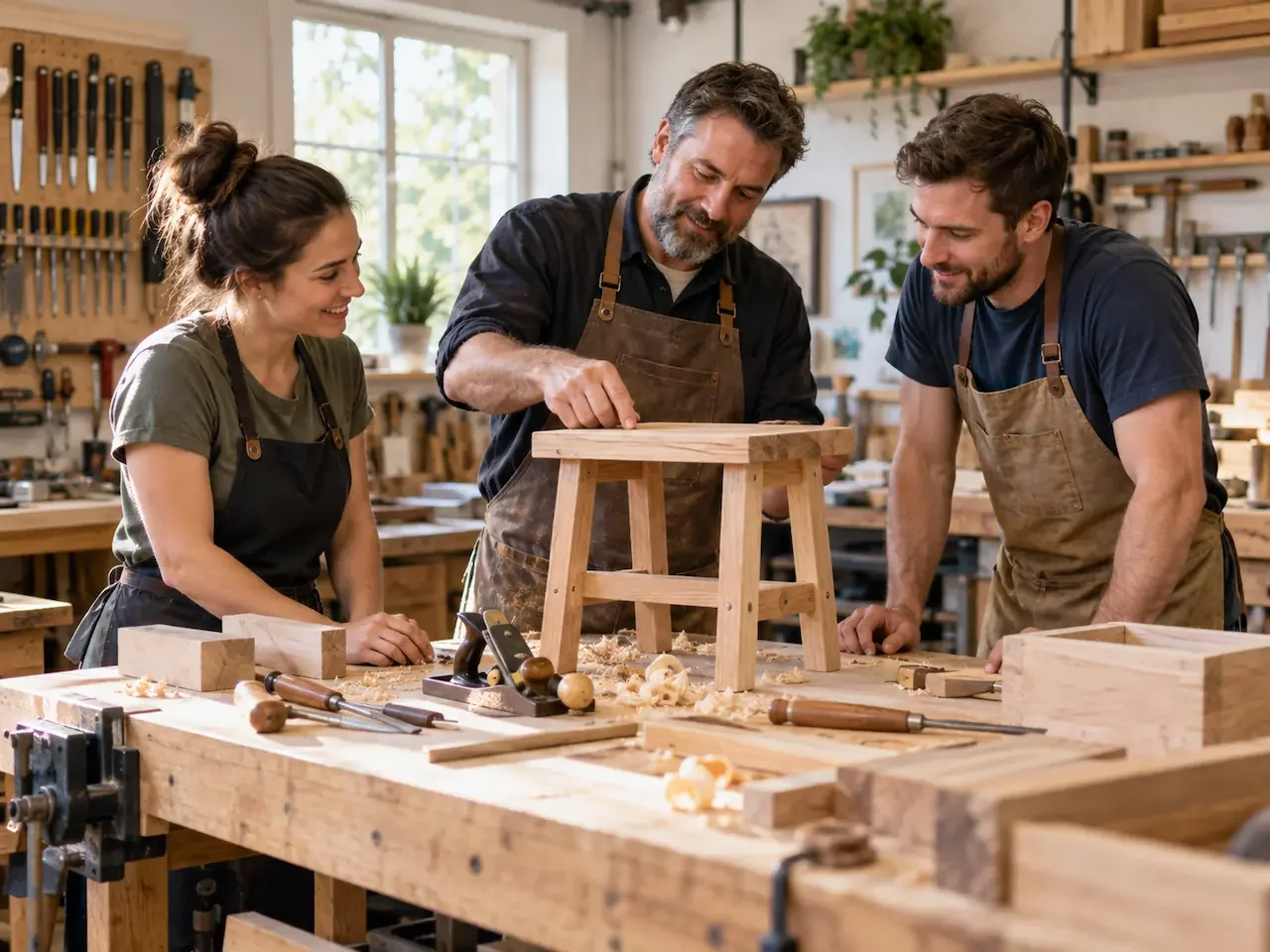
If you have never used a chisel, cut a joint or worked at a proper woodworking bench, joining your first course can feel slightly intimidating.
It does not need to.
A good beginner woodworking course should assume that you are starting from the beginning. You should not be expected to walk in knowing the names of every tool, how timber behaves or how to make perfectly square cuts.
The point of the course is to teach you those things.
When I teach beginners, I would much rather someone ask a basic question than pretend they understand something involving a sharp tool. Woodworking rewards patience and accuracy. Pretending you know what you are doing tends to reward you rather differently.
At my Melbourne workshops, the early focus is on understanding the material, using tools safely and learning why a particular technique works before worrying about speed.
Here is what you should realistically expect when starting.
Do You Need Any Woodworking Experience Before Joining?
No.
A genuine beginner woodworking class should be suitable for someone with little or no practical experience.
You may never have used woodworking tools before. You might know a little from DIY projects, or you may simply own an old piece of furniture and want to understand how it was made.
All of those are reasonable starting points.
The important things are being willing to listen, work carefully and accept that your first attempt at something probably will not look like the work of someone who has been doing it for thirty years.
That is normal.
My woodworking and furniture restoration courses in Melbourne begin with foundational skills before moving into more involved restoration and repair techniques.
What Will You Learn in a Beginner Woodworking Course?
The exact content varies between courses, but beginners should come away understanding more than simply how to operate a few tools.
The useful foundation includes:
workshop and tool safety
understanding timber and grain direction
measuring and marking accurately
basic cutting and shaping
sanding and surface preparation
simple repair techniques
basic assembly and joinery principles
understanding finishes and oils
learning how to assess your own work
For furniture restoration in particular, learning why something has been constructed or finished a certain way is just as valuable as knowing how to change it.
That is especially true with older furniture.
If you start attacking a veneered mid-century cabinet with a power sander because someone on the internet restored a solid pine table that way, the lesson can become unexpectedly expensive.
What Happens on the First Day?
Your first session should begin with the workshop rather than the project.
You need to understand how the space works, where tools belong and what safety procedures apply before anything useful happens at the bench.
A beginner session may cover things such as:
workshop safety and protective equipment
identifying commonly used tools
correct ways to hold and control those tools
measuring and marking timber
understanding grain direction
basic cutting or sanding exercises
preparing for practical project work
Nobody sensible expects a complete beginner to walk in and start building a dining chair in the first twenty minutes.
The first goal is control.
Once you understand how the tools and timber respond, accuracy starts becoming much easier.
Will You Use Hand Tools or Power Tools?
Usually both, depending on the course.
Basic woodworking may introduce tools such as saws, chisels, planes, drills, clamps and measuring equipment alongside powered equipment used for cutting, sanding or preparation.
The important part is not simply learning how to switch a machine on.
You need to understand what the tool is designed to do, where your hands should be, how the timber should be supported and what can go wrong if it is used badly.
Safety is one of the strongest reasons to learn woodworking in a supervised environment rather than teaching yourself entirely from online videos.
A video cannot see that your hand is in the wrong place.
An instructor can.
Do You Need to Buy Woodworking Tools Before the Course?
Usually, buying a large collection of tools before you know what you actually enjoy doing is a poor use of money.
Beginners regularly assume that woodworking starts with shopping.
It does not.
It starts with learning.
A professional workshop should have the equipment required to demonstrate the techniques being taught, although you should always check the requirements for the particular course you are booking.
Once you have some practical experience, buying your own tools makes much more sense because you will understand what you actually need.
There is no shortage of expensive woodworking equipment available to people who have not yet discovered whether they even enjoy woodworking.
Will You Make Something During a Beginner Course?
Many beginner woodworking courses are project based because making something gives individual techniques a purpose.
Measuring makes more sense when two components actually need to fit together. Sanding becomes more meaningful when you can see how preparation affects a finish. Joinery becomes considerably easier to understand when the joint has to hold something.
The exact project depends on the workshop and course format.
In furniture-restoration training, the emphasis may also be on working with sample materials or learning specific restoration processes rather than building an entirely new item.
What matters is that the practical work reinforces the technique being taught.
You are there to learn how to work, not simply to leave with an object.
What Woodworking Skills Are Hardest for Beginners?
For most beginners, using a tool is not actually the hardest part.
Accuracy is.
Measuring carefully, marking a line correctly and then cutting on the correct side of that line sounds painfully simple until you try doing it consistently.
Common beginner difficulties include:
measuring accurately
making square cuts
controlling hand tools
recognising grain direction
knowing how much material to remove
sanding evenly
understanding when to stop
fixing a mistake without creating a second one
That last skill becomes surprisingly valuable.
Woodworking involves problem solving. Timber is a natural material, older furniture has often been repaired before, and projects rarely behave exactly as expected.
Learning how to inspect what happened before immediately reaching for another tool is part of becoming competent.
What Should You Wear or Bring to a Woodworking Class?
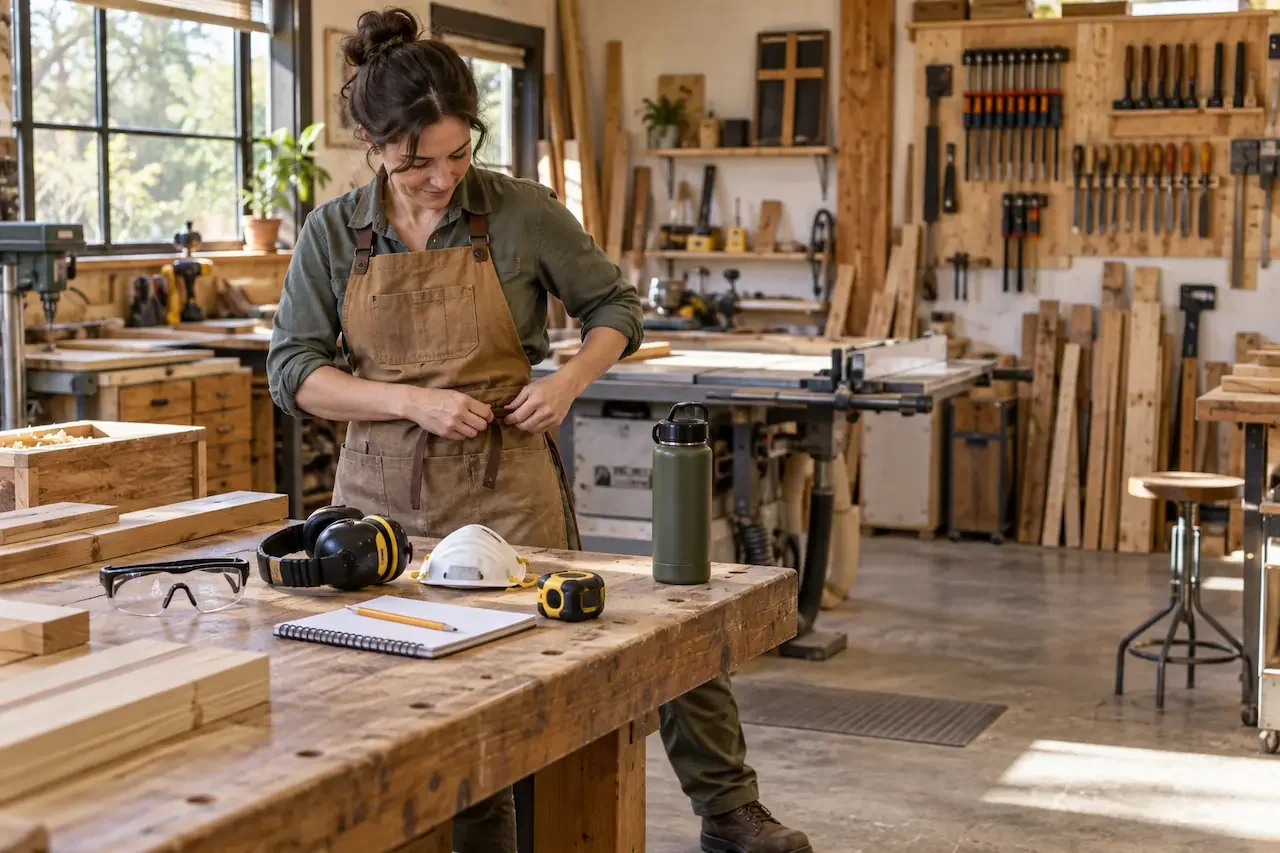
Requirements vary between workshops, so always check the instructions for the course you book.
In a working workshop, practical clothing is more useful than fashionable clothing.
You may need:
enclosed footwear
comfortable clothes suitable for workshop work
eye or hearing protection where required
something for taking notes
any project-specific items listed by the instructor
Avoid loose clothing, jewellery or anything that can interfere with tools and machinery.
You should also arrive prepared to get dusty.
Timber has little respect for your wardrobe.
What Is Different About Learning Furniture Restoration?
General woodworking often focuses on making something from new timber.
Furniture restoration adds another problem: somebody has already made the object, often decades ago, and your job is not to unnecessarily destroy the useful work they already did.
You need to learn how to assess:
what timber or veneer you are working with
whether the finish is original
what has actually been damaged
whether joints are structurally sound
which components can be retained
how aggressive a repair really needs to be
At Mid Century Restoration, my workshops focus particularly on mid-century furniture, including timber assessment, surface preparation, basic repairs, structural considerations and appropriate finishing methods.
If restoration rather than general woodworking is what interests you, you can also read my guide on learning furniture restoration without experience or tools.
How Long Does It Take to Become Good at Woodworking?
Longer than one course.
That does not mean a beginner course is ineffective. It means woodworking is a practical skill, and practical skills improve through repetition.
A course can give you the correct foundation.
After that, improvement comes from doing the same fundamental things repeatedly:
measure, mark, cut, inspect, adjust and try again.
You will normally notice improvements in accuracy and tool control quite quickly. More complicated furniture making, joinery, veneer work, structural repair and finishing take considerably more practice.
There is nothing particularly mysterious about that.
The more controlled work you do, the better your hands become at doing it.
Is a Woodworking Course Worth It for a Complete Beginner?
It can save you a large amount of trial and error.
You can certainly learn parts of woodworking from books, videos and experimentation. I still learn by looking at other people's work.
What a course adds is immediate feedback.
An instructor can show you that your technique is wrong before you repeat it fifty times. They can explain why your joint does not fit, why the timber is tearing out or why the surface is not preparing evenly.
More importantly, you learn safe working habits before bad habits have time to become automatic.
For complete beginners, that is often worth considerably more than simply learning how to complete one project.
What Should You Look for When Choosing a Woodworking Course in Melbourne?
Do not choose a course purely because the photographs look impressive.
Find out what you are actually being taught.
Before booking, look for answers to these questions:
Is it genuinely suitable for complete beginners?
What techniques will be covered?
Is the training hands-on?
Will you receive direct instruction?
What tools will you use?
What safety instruction is provided?
Are materials or tools supplied?
Is there a project or practical outcome?
Is the course general woodworking, furniture making or restoration?
What should you bring?
What level can you progress to afterwards?
The right course depends on what you want to learn.
Someone wanting to build furniture from scratch needs a different emphasis from somebody interested in restoring a 1960s teak sideboard.
What I Want Beginners to Learn
I am less interested in teaching somebody to rush through a checklist of techniques than I am in teaching them to look properly at what is in front of them.
Good woodworking starts with understanding the material.
Good restoration adds another layer: understanding what should not be changed.
I want beginners to leave knowing how to approach a job carefully, use tools with more confidence and recognise when they need more information before doing something irreversible.
Once you have that foundation, learning more advanced techniques becomes considerably easier.
Beginner Woodworking Courses in Melbourne
I run practical woodworking and furniture restoration workshops in Melbourne for people interested in learning how mid-century furniture is constructed, repaired and finished.
The beginner level covers foundational workshop skills before progressing into areas such as surface preparation, basic timber repairs and finishing.
If you are completely new to woodworking, that is not a disadvantage.
That is what beginner training is for.
You can also contact me about upcoming workshops if you want to check which course best suits your level.
Frequently Asked Questions
Can I join a woodworking course if I have never used tools before?
Yes. A beginner course should introduce tool use and workshop safety from the beginning rather than assuming previous woodworking experience.
Do I need my own tools for a beginner woodworking course?
Not necessarily. Workshop requirements vary, so check what equipment is supplied before buying anything. It is usually better to learn what different tools do before investing heavily in your own equipment.
Are woodworking classes safe for complete beginners?
They should be when tools are introduced properly, safety procedures are followed and practical work is supervised. Learning safe tool handling is one of the main advantages of structured training.
What should I learn first in woodworking?
Start with workshop safety, measuring, marking, understanding timber and controlling basic tools. Advanced joinery is much easier once those fundamental skills are reliable.
Will I build furniture during my first woodworking course?
That depends on the course. Many classes use a small project to teach measuring, cutting, joinery and finishing, while restoration workshops may focus on samples or existing furniture techniques.
Is woodworking hard to learn?
The basic concepts are straightforward, but accuracy takes practice. Most beginners struggle more with consistency and tool control than understanding the theory.
What is the difference between a woodworking course and a furniture restoration course?
General woodworking often teaches how to make objects from timber. Furniture restoration also teaches you to assess existing furniture, preserve original materials and repair damage without unnecessarily replacing or altering sound components.
How do I choose a beginner woodworking course in Melbourne?
Look at the actual syllabus rather than simply the course title. Check whether the class welcomes complete beginners, how much practical instruction it includes, what tools and techniques are covered and whether its focus matches what you want to learn.
Final Thoughts
Your first woodworking course is not about becoming a furniture maker in a weekend.
It is about learning how to approach timber properly.
You should leave with a better understanding of tools, safety, measuring, materials and the small decisions that separate controlled woodworking from simply cutting pieces of timber and hoping they fit.
The confidence comes afterwards, through practice.
Start with the fundamentals, learn why the techniques work and let the complicated projects come later.