
Why Teak Furniture Turns Grey (and How to Fix It)
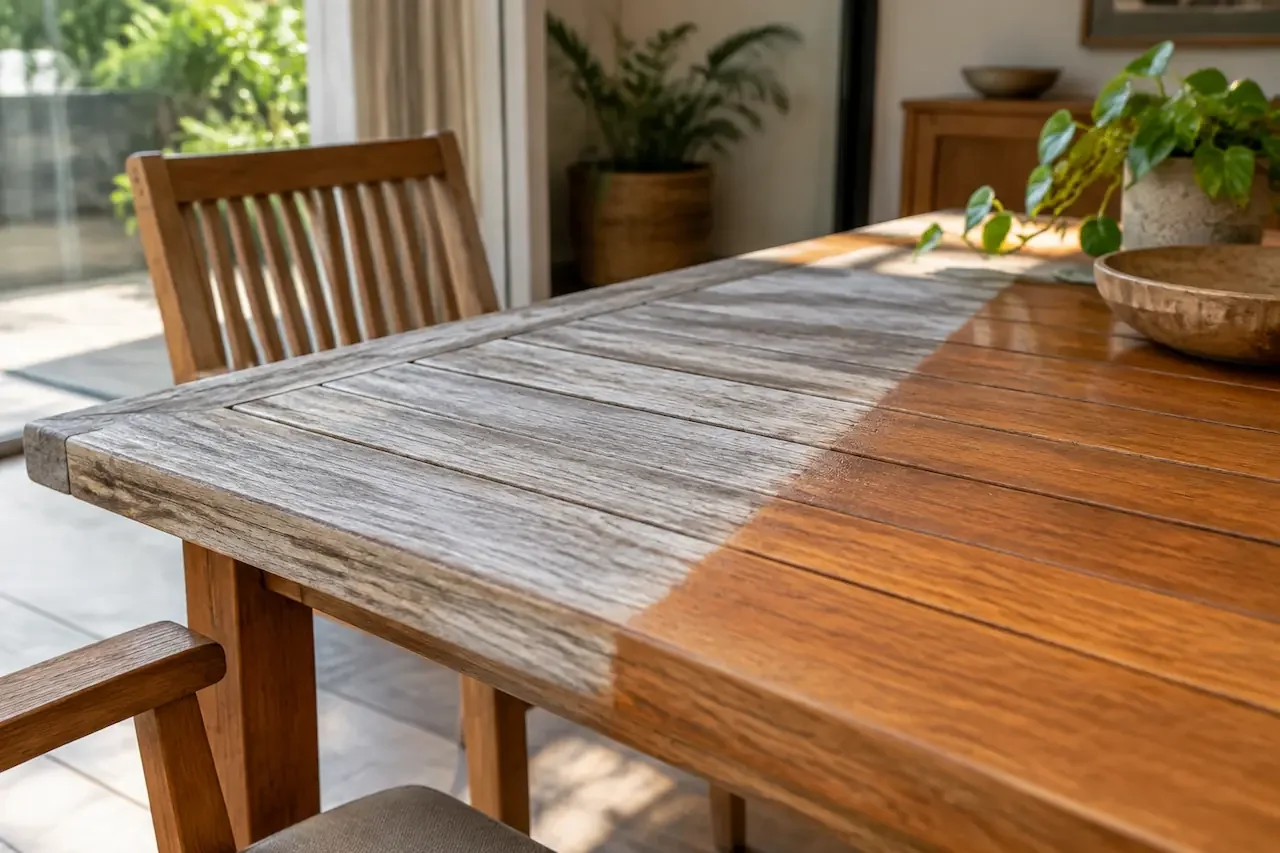
If you've looked at a once-beautiful teak sideboard, dining table or cabinet and noticed it's gone grey, faded or lifeless, you're not alone. It's one of the most common concerns I hear from owners of vintage and mid-century teak furniture in Melbourne.
The good news is that grey teak isn't necessarily ruined. In most cases the colour change sits on the surface and can be improved with careful cleaning, controlled preparation and the right finish. The safest method depends on whether the piece is solid teak or veneer, whether it lives indoors or outdoors, and whether the original coating is still there.
I regularly work on faded teak furniture, including Danish sideboards, G Plan cabinets, dining tables, chairs and inherited pieces. My approach always starts with identifying why the wood has changed before deciding whether it needs cleaning, reconditioning, structural repair or a full refinish.
Why Teak Furniture Turns Grey
Teak is naturally durable because it holds oils that resist moisture, insects and decay. Those same qualities make it a great furniture timber, but they don't stop the visible surface from changing over time.
Oxidation is one of the main causes. When teak is exposed to air, the outer fibres and natural oils gradually shift, and the warm golden brown colour can turn pale, silvery or dull, particularly once the original finish has worn away. Sunlight adds to this. UV light breaks down components in the timber and bleaches the surface, and even indoor furniture near a large window can fade unevenly, with one side of a cabinet turning lighter than the other or objects left on a tabletop leaving darker outlines behind.
Moisture speeds the process up too. Outdoor teak is naturally more exposed, but indoor pieces can be affected just as easily by spills, condensation, damp rooms, plant pots and high humidity, and repeated wetting and drying raises the grain and dulls the surface over time. Sometimes the wood itself hasn't actually greyed at all, it's the old lacquer, oil, wax or varnish that's deteriorated and gone cloudy, dry or sticky, often hidden under layers of old polish, silicone spray, cooking residue or hand oils that mask the natural grain.
A lack of the right maintenance makes all of this more visible. Teak doesn't need constant oiling, and over-oiling can actually do as much damage as neglect, creating a sticky surface, darkening the timber unevenly and attracting dust. If your piece has just gone dull or dry rather than grey, my guide on bringing back the shine to dull, dry wooden furniture is worth checking before you reach for oil or polish.
Is Grey Teak Furniture Damaged?
Not always. In most cases, grey teak is a surface condition rather than structural damage, and the timber underneath the faded layer is often still dense, stable and rich in colour. This is especially common on outdoor teak that's developed an even silver-grey patina, and plenty of owners actually choose to keep that look, since natural weathering doesn't mean the piece is weak or decaying.
Indoor mid-century furniture needs a closer look, because uneven greying can come from sunlight, finish breakdown, old polish or a previous restoration attempt, and the colour alone doesn't tell you the full condition of the piece. I look for a few specific warning signs before deciding whether the problem goes beyond ordinary fading:
Deep cracking, black staining or soft timber
Loose joints or movement in the frame
Lifting veneer, bubbling or surface separation
Sticky, rough or heavily deteriorated finish
Evidence of previous aggressive sanding
Water rings and dark moisture marks are a separate issue from ordinary greying, and I've covered those specifically in my guide on removing water rings, heat marks and white marks from wood furniture.
Is Grey Teak Reversible?
In most cases, yes. Grey or faded teak can usually be brought back when the treatment matches the timber, construction and existing finish. A lightly faded indoor table might only need controlled cleaning and finish reconditioning, while a severely weathered outdoor setting may need the damaged surface fibres removed before a protective treatment goes on. A veneered sideboard needs a much lighter touch, since aggressive sanding can permanently damage the thin teak layer underneath.
A lot of well-made mid-century pieces use teak veneer rather than solid teak across every surface, which isn't a sign of lower quality, it's what let manufacturers keep consistent grain patterns across large panels while keeping the furniture stable. The problem starts when veneer gets treated like thick solid timber. Heavy machine sanding can cut straight through the decorative surface and expose the substrate underneath, and once that happens the original grain is very hard to bring back. Before refinishing anything, I check the edges, corners, drawer openings and damaged areas to work out whether I'm dealing with solid teak or veneer, and whether it's already been sanded before.
The goal of restoration was never to make an older piece look brand new. Good restoration brings back the warmth and clarity of the teak while keeping its grain, proportions, edges, maker's marks and original mid-century character intact. For safer preparation guidance on this, I've written a separate guide on refinishing teak furniture without damaging the original finish.
How Professional Teak Restoration Works
I start with assessment, not sanding or oiling. That means identifying the timber, the finish type, the construction and how deep the visible damage actually goes, and checking for water staining, loose joints, veneer problems or evidence of earlier coatings or repairs.
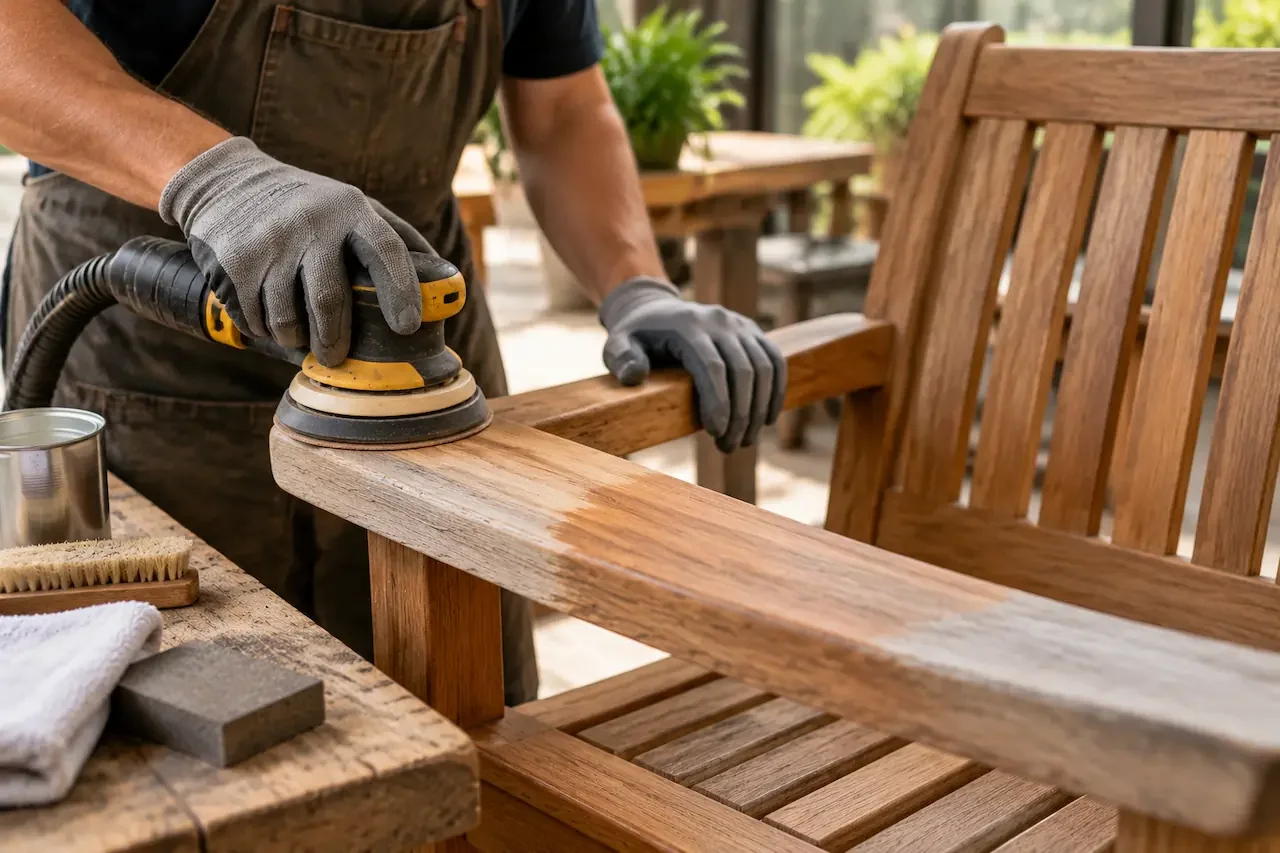
From there I clean the surface using a method suited to the existing finish, removing dust, wax, silicone spray, grease and household polish that would otherwise interfere with the new finish, and I go easy with water around veneer edges, joints and older adhesives. If the grey appearance comes from oxidised fibres or a failed coating, I'll do limited surface preparation, which might mean controlled hand sanding or finish correction, disturbing only what genuinely needs to go. Loose joints, lifting veneer and damaged edges get repaired before any cosmetic work starts, because oiling over unstable furniture might improve the colour for a while but won't fix the structural problem underneath.
Once the piece is stable and properly prepped, I apply a finish that enhances the grain without making the furniture look overly dark, glossy or modern, and indoor pieces often need a different finish from outdoor or semi-exposed ones. My teak and timber restoration service covers this full process, from cleaning through structural repair, veneer stabilisation, refinishing and long-term protection.
Can I Fix Grey Teak Myself?
Minor fading on a simple solid teak surface can sometimes be improved at home, but valuable, collectible or veneered furniture needs more caution. Applying teak oil straight onto a grey surface can darken the oxidised fibres without actually restoring the original colour, and oil can react badly with lacquer, varnish, wax, silicone contamination or old polish already on the piece. Sanding carries its own risk, since the wrong grit, uneven pressure or aggressive machine sanding can leave scratches, soften edges and create visible colour differences, and on veneer even a small mistake can expose what's underneath. Commercial teak oils vary a lot too, some give a rich colour at first but stay tacky, attract dust or make later professional refinishing harder.
Professional restoration is generally the safer call when any of these apply:
The piece is antique, collectible, veneered or designer-made
The colour is uneven, dark or comes with staining
The surface feels sticky, cracked, raised or rough
Joints are loose or the frame has structural movement
Previous cleaning, oiling or sanding has made things worse
Cost depends on size, construction, condition and the treatment needed, and I've broken that down further in my guide to furniture restoration cost in Melbourne.
How to Stop Teak From Turning Grey Again
Once restored, teak needs protecting from whatever caused the fading in the first place. Keep indoor furniture away from prolonged direct sunlight where you can, and curtains, blinds or UV-filtering window treatments help protect valuable pieces near large windows. Dust regularly with a soft cloth, clean up spills promptly, and avoid leaving wet cloths, plant pots, hot objects or cleaning bottles sitting on the surface.
Stick to products that suit the existing finish. Silicone furniture sprays might give a quick shine but can contaminate the surface and cause problems for any future refinishing. Don't oil on a fixed schedule either, inspect the timber first and only oil when it's clean, dry and genuinely suited to oil treatment, since furniture with lacquer, varnish or another sealed coating often won't benefit from oil at all. Outdoor teak will always weather faster than an indoor sideboard, cabinet or dining table, so the maintenance approach should match the environment the piece actually lives in.
Why Work With Me
I use preservation-focused methods that protect a piece's grain, structure and original mid-century character rather than just making it look new.
I identify solid teak versus veneer before any preparation starts
I assess the existing finish before recommending oil or a full refinish
I fix structural and veneer problems before any cosmetic work
I avoid sanding more than the piece actually needs
I preserve maker's marks and original details wherever possible
Final Thoughts
Grey, faded or lifeless teak doesn't have to stay that way. In most cases the natural warmth and grain are still there under an oxidised surface or failed coating. The safest path starts with understanding whether you're dealing with surface weathering, finish failure, moisture damage or structural wear, rather than jumping straight to cleaning, sanding or oiling. Whether it's a Danish sideboard, a G Plan cabinet, a vintage dining table or an outdoor setting, the right treatment depends on the piece in front of you, not a one size fits all process.
FAQs
Why does teak furniture turn grey?
Teak usually turns grey because of sunlight, oxidation, moisture and finish deterioration acting on the outer surface. In most cases the change sits in the coating or upper timber fibres rather than affecting the whole piece.
Is grey teak reversible?
Yes, in most cases. Evenly grey teak is often weathered rather than structurally damaged, and the timber underneath is usually still in good condition. Cracking, softness, black staining or loose joints are signs the problem goes deeper than surface greying.
Can I fix grey teak furniture myself?
Light surface fading on solid teak can sometimes be improved at home with careful cleaning and the right oil. Veneered, antique or heavily discoloured pieces are safer left to a professional, since a small mistake with sanding or oil can be hard to undo.
Will teak oil fix grey teak?
Not on its own. Oil applied straight onto a grey, dirty or unassessed surface can seal in the faded colour or react badly with whatever finish is already there. The surface needs cleaning and assessing first.
When should grey teak be professionally restored?
Bring in a professional when the piece is veneered, antique or designer-made, when the colour is uneven or staining is present, or when the surface feels sticky, cracked or structurally loose. It's also worth it whenever original hardware, labels or period details need to be preserved.