
How to Clean Indoor Teak Furniture Without Damaging It
To clean indoor teak furniture, use a barely damp cloth with a drop of mild dish soap, wipe along the grain, and dry it straight away with a second cloth. That handles almost everything a piece will pick up indoors.
Most of the dullness I'm asked about isn't damage. It's spray polish, hand oils and dust sitting on a sound finish underneath. Cleaning takes that off. Oil generally won't.
What indoor teak actually needs
Indoor teak lives an easy life compared with the garden furniture most care advice is written for. It isn't weathering, it isn't wet, and it isn't losing its oils to UV through a window.
A soft dry cloth once a week keeps dust off, and dust dulls a surface fastest. It's mildly abrasive, and wiping it around dry is how fine scratching accumulates on a coffee table over twenty years.
When something needs more than dusting, a barely damp cloth with a little mild soap will lift finger marks, food residue and the greasy film that builds around handles. Dry it immediately. Water left standing along a veneer edge or joint line is the one way a cloth causes real damage.
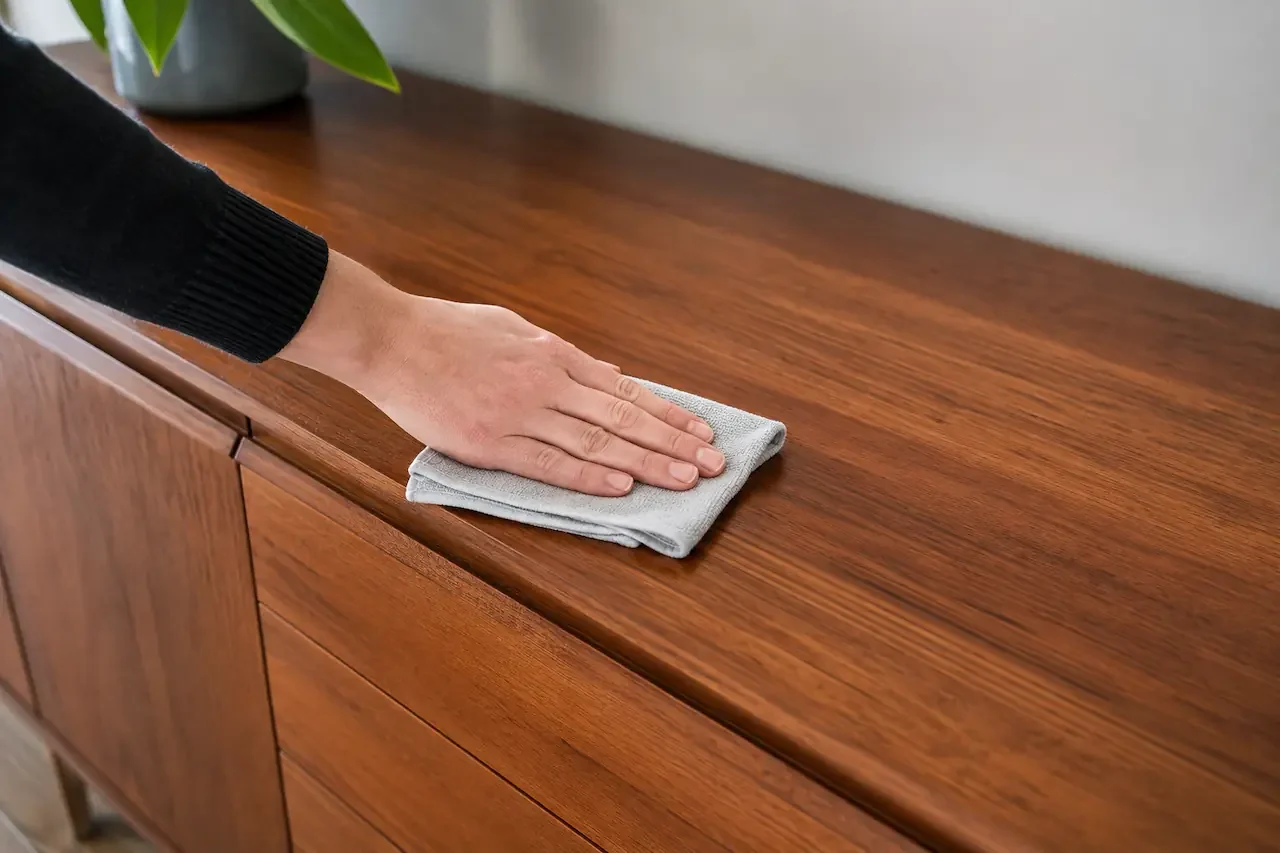
The product people choose causes more trouble than the method.
What to keep away from it
The damage I repair from cleaning almost always comes from a bottle rather than a technique. Avoid:
Bleach and ammonia-based cleaners. These strip colour out of teak and leave it flat
Silicone furniture sprays. Instant shine, then contamination. Silicone causes fisheye when the piece is later refinished, and removing it is slow work
Steam cleaners. Heat plus moisture on a fifty-year-old glue line will open joints
Abrasive pads and melamine foam erasers. These cut the finish, and on a lacquered top the dull patch is permanent
Solvent wipes and kitchen degreasers. Most soften an old lacquer or shellac finish on contact
Silicone is the one worth taking seriously, because it's in a lot of supermarket sprays and doesn't announce itself. A piece sprayed for years looks fine, then causes problems for whoever refinishes it a decade later.
That brings up the product people reach for most.
Why oil is usually the wrong instinct indoors
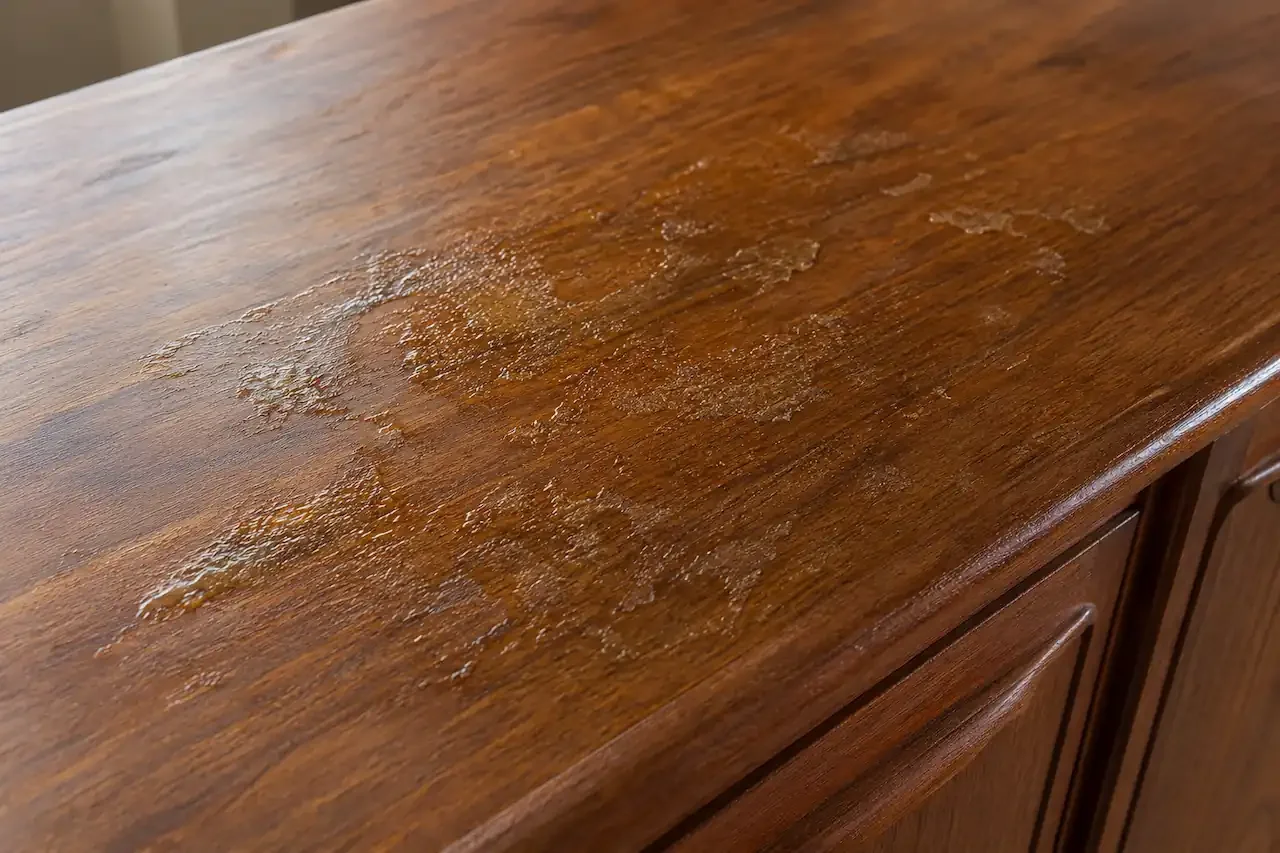
"Teak oil" contains no teak. It's a marketing name for a linseed-based finishing oil developed for exterior timber that's genuinely drying out. Indoor furniture in a Melbourne house isn't in that condition.
A lot of mid-century teak also left the factory with a sprayed lacquer rather than an oil finish, British pieces especially. Oil over intact lacquer has nowhere to go. It sits on the surface, goes gummy within days, and collects dust into a sticky film that has to come off with solvent.
When a piece really is oil-finished and has dried out, oil is right: thinly, along the grain, wiped back hard within about fifteen minutes. The wiping back is the step people skip, and skipping it is what makes a surface tacky. Once or twice a year is plenty.
If your teak looks dry rather than dirty, diagnose that before buying anything. I've written separately on why mid-century furniture looks dry and faded.
How to tell if your piece will even take oil
Two minutes with a cotton bud settles it, on a hidden spot such as the underside of a top.
Put a drop of water on the surface for five minutes. If it beads and wipes away with no mark, there's a film finish on top.
Touch acetone to a hidden edge with a cotton bud. If the finish softens or comes onto the bud, it's lacquer. Don't oil it.
If acetone does little and mineral turps darkens the timber slightly, it's an oil finish and will accept more oil.
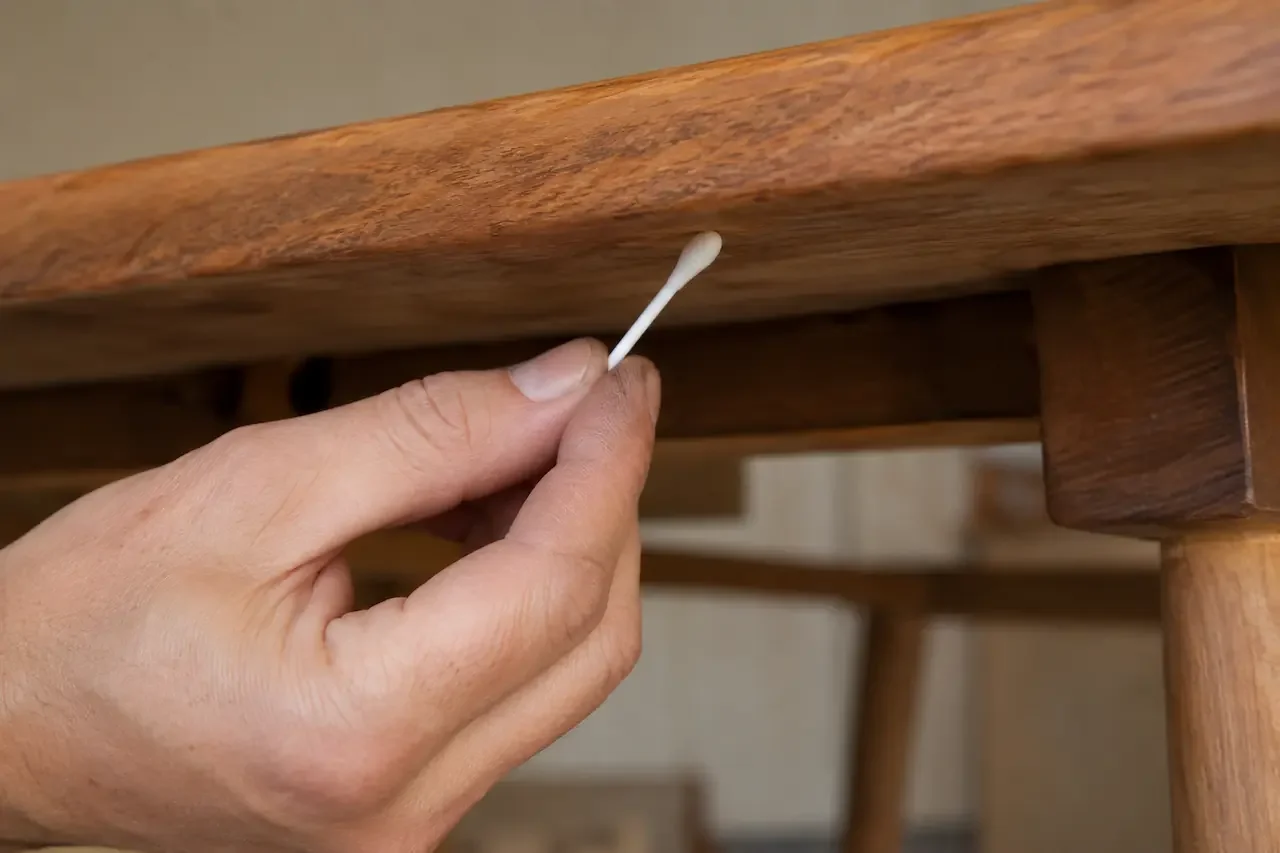
The answer often depends on the maker. Danish pieces were more often oiled and British ranges more often sprayed, which is why one product gives two results on two sideboards in the same room. I've set that out in Danish and G Plan teak restoration.
Sometimes the test tells you the problem is past cleaning altogether.
When cleaning won't fix it
Cleaning corrects surface contamination. It won't correct a failed finish. These are the signs the problem has gone past a cloth:
A white ring or cloudy bloom. Moisture trapped in the finish rather than the timber, and often reversible. See removing water rings from wood furniture
A tacky surface that never dries. Almost always oil over a sealed finish. More oil makes it worse; it has to come off
Patchy grey panels while the rest looks fine. The finish has broken down unevenly, usually on the window side
Veneer lifting at an edge. Glue failure, and cleaning around it accelerates it
Dark rings gone black. Moisture has reached the timber through the finish
The last two need work rather than maintenance. That's when a piece comes to the workshop for teak and timber refinishing, and my guide to furniture restoration costs in Melbourne covers the rest.
Most pieces never get there, provided a few things are handled day to day.
Keeping it right long term
Sunlight does more damage to indoor teak in Melbourne than anything else. A north-facing window through summer fades an unprotected top within two or three seasons, and it fades unevenly, so you get a pale panel beside a dark one. Blinds through the afternoon help, as does moving objects around so the same patch isn't permanently shaded.
Ducted heating is the other one. Dry air shrinks timber, and on a veneered top that shows as hairline cracking along the grain. Keeping the piece away from a direct outlet is enough.
Otherwise it's coasters, felt pads, and never letting a plant pot sit on the timber. Condensation under a pot gets through an old finish faster than a spilled drink.
Conclusion
Indoor teak needs less than most care advice suggests. Dust it, wipe it with a barely damp cloth when it needs it, dry it straight away, and keep it out of direct sun. Test before you oil, because most mid-century teak won't take it. The pieces I see in the worst condition are rarely the neglected ones.
Why work with me
I'm Richard Lloyd, and I've spent over thirty years working on mid-century timber furniture from my workshop at 230 Brunswick St in Fitzroy. Every piece is handled by me.
I'll tell you when a piece needs nothing more than cleaning, and won't charge for work it doesn't need
I identify the existing finish before recommending any product
I use traditional oils and waxes rather than film finishes that sit on the grain
I'll say plainly if something isn't worth restoring
If you're unsure what your piece has on it, send photos or book an appointment. The workshop is by appointment only, and I service Northcote, Greater Melbourne and the Mornington Peninsula.
Frequently asked questions
How often should I oil indoor teak furniture?
Once or twice a year at most, and only if the piece is genuinely oil-finished and looks dry. The common advice to oil every three to four months comes from outdoor teak care and builds up indoors faster than it cures.
Why is my teak sideboard sticky after oiling?
Either the oil went over a lacquered surface and couldn't absorb, or it wasn't wiped back within about fifteen minutes. Adding more won't fix it. The residue has to come off with solvent before anything else goes on.
Can I use dish soap on teak furniture?
Yes, a small amount in warm water on a barely damp cloth is safe on almost any teak finish. Bleach, ammonia cleaners, degreasers and silicone sprays aren't. Dry the surface immediately either way.
How do I get a white water ring off a teak table?
A white ring is moisture trapped in the finish rather than the timber, so it's often reversible without stripping anything. Dark rings mean the moisture has reached the wood and need proper treatment. Don't sand it, because on a veneered top there's very little thickness to work with.
Why has my indoor teak gone grey when it's never been outside?
UV through a window oxidises the top layer of timber, and dry indoor air pulls oil out of the surface. On an oil-finished piece, cleaning and re-oiling usually restores the colour. On a lacquered piece the greyness sits in the finish, and the finish has to be addressed.