
Is it better to restore myself or hire a specialist for mid century furniture?
When a vintage piece begins to show wear, surface damage or structural weakness, many owners face the same decision: should they attempt the restoration themselves or hire an experienced furniture restoration specialist? Online tutorials can make furniture restoration appear straightforward, but mid-century pieces often contain materials and construction details that are easily damaged by standard DIY methods.
Routine cleaning and non-invasive maintenance may be manageable at home when the existing material and finish are understood. However, sanding, stripping, veneer repair, joint reconstruction and complete refinishing involve a much higher level of risk. The right decision depends on the furniture’s condition, originality, construction, value and the type of work required.
A useful starting point is to separate routine care from actual restoration. Routine care is intended to slow deterioration and keep a stable piece clean, while restoration may involve correcting damage, rebuilding weakened components or treating a failed finish. Confusing these two types of work can lead owners to begin an invasive process when the furniture only requires controlled maintenance or a professional condition assessment.
Why Mid-Century Furniture Requires Special Care
Many mid-century furniture pieces combine solid timber frames with thin timber veneer applied over a stable substrate. They may also contain aged adhesives, sculpted edges, lightweight frames, tapered legs and factory-applied finishes. These details contribute to the furniture’s appearance and character, but they also make the piece vulnerable to aggressive sanding, unsuitable chemicals and poorly planned repairs.
Before any work begins, it is important to identify whether the visible surface is solid timber, veneer, laminate or a later coating applied during a previous restoration. A treatment that is suitable for solid timber may permanently damage thin veneer. Similarly, a surface that appears dry or faded may require careful cleaning or finish correction rather than complete stripping and refinishing.
Age-related wear must also be distinguished from active damage. Minor colour variation, gentle surface wear and an established patina may form part of the furniture’s history and do not always need to be removed. In contrast, lifting veneer, open joints, unstable frames, flaking coatings and moisture-related swelling indicate problems that may continue to worsen. A careful assessment helps determine whether the furniture needs preservation, localised repair or more extensive restoration.
What Can You Safely Do Yourself?
Limited maintenance may be appropriate when the furniture is structurally stable and the work does not remove or permanently alter original material. Gentle dust removal, careful surface cleaning and protecting the piece from direct sunlight, moisture and heat are generally lower-risk tasks. Any cleaning product should first be tested on a small, inconspicuous area.
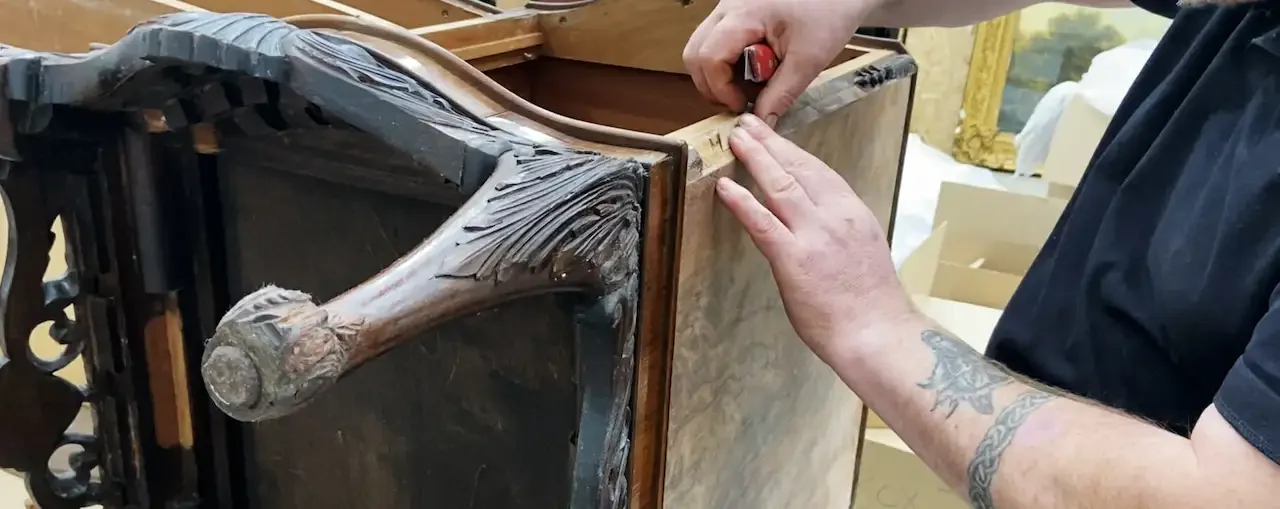
DIY work becomes significantly riskier when it involves sanding, chemical stripping, staining, re-gluing joints, replacing veneer or applying a new coating. These processes can alter the colour, sheen, texture and proportions of the piece. Even tightening a loose joint without identifying why it failed may conceal a larger structural problem or pull the furniture out of alignment.
A practical rule is to stop whenever the treatment would remove material, change the existing finish or affect a structural component. Owners should also stop if the cloth begins lifting colour, the surface becomes sticky, veneer moves under light pressure or a joint continues to shift after the furniture is unloaded. These warning signs suggest that the problem is more complex than routine maintenance and should be investigated before further work is attempted.
Owners who want to develop practical skills before attempting minor work can attend a furniture restoration workshop in Melbourne. Learning how to identify timber, assess veneer, examine finishes and recognise structural warning signs can help prevent avoidable damage.
Where DIY Furniture Restoration Can Go Wrong
The consequences of unsuccessful DIY restoration are not always visible immediately. A newly coated surface may initially appear improved, while problems such as poor adhesion, trapped contamination, uneven colour or joint movement may develop later. Once original material has been removed, some mistakes can be difficult or impossible to reverse.
Over-sanding can wear through thin veneer, soften crisp edges and remove details that contribute to the furniture’s original design. Incompatible stains, oils or thick polyurethane coatings can change the timber’s natural colour and produce a finish that does not suit the period. Harsh chemical strippers may also affect adhesives, discolour timber or leave residues that interfere with later finishing.
Structural repairs carry additional risks. Adding screws, brackets or unsuitable adhesives may provide temporary stability while damaging original components or making future repair more difficult. Good restoration preserves as many future treatment options as possible, while aggressive DIY work can permanently limit what a professional restorer can later recover.
Colour matching is another commonly underestimated part of restoration. Timber colour is influenced by species, age, light exposure, existing coatings and previous treatments, so applying a standard stain rarely produces an even or historically appropriate result. Darkening one damaged area may make the repair more noticeable, while staining the entire piece to conceal a local defect can unnecessarily alter unaffected surfaces. Professional colour correction is usually completed gradually and tested against the surrounding timber.
Furniture with failed coatings, faded surfaces, uneven colour or previous refinishing may require specialist teak and timber furniture refinishing rather than another layer of oil, stain or varnish.
What Professional Mid-Century Furniture Restoration Involves
Professional restoration begins with assessment rather than immediate repair. The restorer identifies the timber, veneer, finish, joinery and construction method before determining whether the damage is cosmetic, structural or a combination of both. Previous repairs, replacement hardware, added coatings and signs of moisture damage must also be considered.
The next step is to determine what should be retained, repaired, stabilised, refinished or left untouched. Professional restoration does not automatically mean stripping and refinishing the entire piece. In many cases, a localised veneer repair, joint stabilisation, controlled surface treatment or finish correction is more appropriate than complete refinishing.
Experience also allows a restorer to anticipate how aged materials may react to moisture, pressure, adhesives and finishing products. Joints can be repaired without unnecessary visible hardware, damaged areas can be blended with the surrounding timber, and surfaces can be treated without excessive material removal. The objective is to improve function and appearance while preserving as much original material and character as possible.
Testing and documentation are also important parts of a controlled restoration process. Before applying a cleaner, adhesive or finishing product to a visible area, a restorer may test the proposed method in an inconspicuous location and observe how the material responds. Photographs taken before and during the work can record the original condition, previous alterations and repairs completed. This creates a clearer restoration history and reduces the likelihood of unnecessary treatment.
Cost Versus Value: What Should You Consider?
DIY restoration may appear less expensive because there is no professional labour fee. However, the true cost can include specialist tools, finishing products, replacement materials, time spent learning the process and the possibility of having failed work corrected later.
The condition and importance of the piece should also influence the decision. Furniture by an identifiable designer or manufacturer, a rare item, a family heirloom or a piece that is difficult to replace deserves greater caution than a low-risk practice project. Appropriate professional restoration may help preserve usability, authenticity and market appeal, although the outcome depends on the furniture’s quality, condition, originality and previous repairs.
A professional assessment does not always result in a full and expensive restoration. The work may be divided into stages, with structural stability and active damage addressed first. Cosmetic improvements or complete refinishing can then be considered later if they are necessary and appropriate.
Replacement difficulty should also be considered when comparing cost and value. A well-proportioned vintage sideboard, dining setting or lounge chair may be difficult to replace with a modern piece of comparable timber quality, construction and design. In these cases, restoring the existing furniture may provide better long-term value than disposing of it and purchasing a lower-quality replacement. However, the proposed restoration should still be proportionate to the item’s condition, intended use and significance to the owner.
When Should You Hire a Furniture Restoration Specialist?
Professional assessment is strongly recommended when the furniture has loose joints, unstable legs, lifting veneer, broken components, water damage, failed finishes or previous repairs involving screws, brackets, nails or unsuitable adhesives. These conditions may affect both the appearance and the safe use of the furniture.
A specialist should also be consulted when the piece has identifiable provenance, meaningful resale value or strong sentimental importance. Financial value is not the only consideration. Damage to an inherited or irreplaceable item can be equally significant, even when the piece would not command a high market price.
Common Warning Signs That Require Professional Assessment
Loose, separating or misaligned joints
Unstable legs, frames or load-bearing components
Lifting, missing, cracked or bubbling veneer
Water marks accompanied by swelling or finish failure
Broken rails, stretchers, arms or supports
Deep scratches that pass through the existing finish
Flaking, sticky, cloudy or heavily deteriorated coatings
Previous repairs using visible screws, metal brackets or excess glue
Loose joints and weakened frames should be addressed through professional furniture repair and structural restoration in Melbourne. Structural restoration focuses on rebuilding stability while retaining original components wherever their condition allows.
The timing of professional intervention can significantly affect the scope of the repair. A slightly loose joint may initially require controlled disassembly, cleaning and re-gluing, while continued use can enlarge the joint, split surrounding timber or place additional pressure on connected components. Likewise, a small area of lifting veneer may be easier to stabilise before it cracks or becomes detached. Addressing these warning signs early can reduce the amount of original material that must be repaired or replaced.
DIY or Professional Restoration: A Practical Decision Guide
Choosing between DIY maintenance and professional restoration depends on the condition of the furniture and the type of work required. Light dusting and routine surface care are generally suitable for DIY, provided caution is used, while professional help is usually unnecessary for these basic tasks.
If the existing finish is unknown, it is best to avoid any invasive work and seek a professional assessment. Furniture with loose or unstable joints should not be repaired through DIY methods, as this typically requires structural expertise. Similarly, veneer that is lifting, cracked or missing should be handled by a specialist to prevent further damage.
Deep water damage to the surface is another clear indicator that professional restoration is required. Finishes that are flaking, sticky or failing also present a high risk if treated without experience, and should be professionally assessed.
Any process involving sanding, stripping or full refinishing carries a high risk of irreversible damage and should be handled by a specialist. In contrast, when only gentle, non-invasive cleaning is required, DIY care may be suitable, although professional input remains optional depending on the value and condition of the piece.
The furniture’s intended use should also influence the decision. A decorative cabinet that remains largely untouched may present different structural risks from a dining chair, desk or lounge that carries weight and is used regularly. Furniture intended for everyday use must be assessed for stability, joint strength and load-bearing safety, even when the visible damage appears minor. Cosmetic improvement should never take priority over safe and reliable function.
Uncertainty is itself a reason to pause before beginning work. A professional assessment does not obligate the owner to commission a complete restoration. It can help identify the safest treatment, the urgency of the damage and whether any work is actually necessary.
Why Choose Us for Mid-Century Furniture Restoration?
Mid-century furniture requires more than general repair skills. The materials, veneer, joinery, finishes and proportions found in these pieces need to be understood before any treatment is selected. Applying a standard furniture-repair method without considering the piece’s age and construction can cause unnecessary and irreversible changes.
Our approach begins with a careful assessment of the complete item. We examine the surface, timber, veneer, joints, structural stability, existing finish and any previous repairs. This helps determine which areas require intervention and which original features should remain untouched.
The objective is not to make every piece appear newly manufactured. Restoration should retain the furniture’s proportions, character and material integrity while improving its stability, function and appearance. Where a localised repair or restrained surface treatment is sufficient, unnecessary stripping and complete refinishing should be avoided.
Recommendations are based on the condition of the individual piece rather than a standard treatment applied to every item. Some furniture may require structural repair before any surface work can begin, while other pieces may benefit from careful cleaning and a restrained finish treatment. Where the original surface remains stable and visually appropriate, preserving it may be preferable to complete refinishing. This case-by-case approach helps avoid unnecessary work and supports a result that remains consistent with the furniture’s age and design.
Owners can begin by providing clear photographs of the full piece, damaged areas, joints, labels and existing finish. This makes it easier to determine whether the furniture needs routine maintenance, localised repair, structural restoration or professional refinishing.
Conclusion
DIY maintenance may be suitable for gentle, non-invasive care when the material and existing finish are understood. However, work involving sanding, stripping, veneer, joints, structural stability or complete refinishing carries a much greater risk of irreversible damage.
Professional assessment is generally the safer choice for valuable, designer, structurally damaged or sentimental furniture. Pausing before making a permanent change is usually less costly than attempting to correct an unsuitable repair after original material has already been removed.
Frequently Asked Questions
Can I Restore Mid-Century Furniture Myself Safely?
Gentle dust removal and limited surface cleaning may be suitable when the material and existing finish are known. Sanding, stripping, staining, joint repair, veneer replacement and complete refinishing carry much greater risks. Valuable, damaged or sentimental pieces should be assessed before invasive work begins.
Will DIY Restoration Reduce Furniture Value?
DIY work does not automatically reduce value, but irreversible changes can affect authenticity and market appeal. Over-sanding, removing original finishes, replacing period hardware or applying unsuitable coatings may make the piece less desirable. The effect depends on the quality of the work and the importance of the original materials.
When Should I Hire a Furniture Restoration Specialist?
Consult a specialist when the piece has unstable joints, lifting veneer, cracked timber, broken components, water damage, failed finishes or unsuitable previous repairs. Professional help is also recommended for designer, rare, valuable or sentimental furniture. Early assessment may prevent minor damage from becoming a larger structural problem.
Is Professional Furniture Restoration Worth It?
Professional restoration may be worthwhile when it improves safety, function and appearance while preserving original material. The decision depends on the furniture’s condition, quality, rarity, sentimental importance and expected restoration cost. An initial assessment can determine whether full restoration or a smaller localised repair is appropriate.
Are There Budget-Friendly Furniture Restoration Options?
Yes. Restoration can often be completed in stages, with essential structural work and active damage addressed first. Cosmetic refinishing may be postponed or limited to specific areas. This approach protects the furniture without requiring unnecessary treatment of the entire piece.
What Happens if Furniture Is Restored Incorrectly?
Incorrect restoration may permanently remove original veneer, soften edges, alter the timber colour or weaken structural components. Incompatible coatings and adhesives can also complicate future treatment. Corrective restoration may be more expensive and may not fully reverse the damage.
How Can I Tell Whether My Furniture Is Solid Timber or Veneer?
Examine the edges, underside and back of the furniture for changes in grain pattern or a visible layer applied over a substrate. Veneer often has a consistent surface grain but may reveal a thin edge where it meets a drawer, door or damaged area. Because high-quality veneer can closely resemble solid timber, professional identification is recommended before sanding or refinishing.
Can Water-Damaged Mid-Century Furniture Be Restored?
Many pieces with water marks, cloudy finishes, lifting veneer or minor swelling can be restored, but the appropriate treatment depends on the depth and duration of the damage. Surface marks may only affect the coating, while prolonged moisture exposure can weaken adhesives, distort substrates and stain the timber. The furniture should be assessed before sanding, heating or applying household remedies.
Should the Original Finish Always Be Preserved?
The original finish should generally be retained when it remains stable, protective and visually appropriate. However, complete preservation may not be practical when the coating is severely flaking, sticky, contaminated or no longer protecting the timber. A restorer can determine whether the finish should be cleaned, locally repaired, reduced or carefully replaced.
How Long Does Professional Mid-Century Furniture Restoration Take?
The timeframe depends on the furniture’s condition, construction and the amount of work required. A localised surface or joint repair may take less time than extensive veneer replacement, structural reconstruction or complete refinishing. Drying and curing periods must also be respected, so an accurate timeframe is normally provided after the piece has been assessed.