
Why Restoring Your Home's Original Timber Features Is Worth It
Original timber features are often the heart of a character home. From timber wall panelling and hardwood flooring to custom joinery, doors, staircases, ceiling beams, and decorative trims, these elements reflect the craftsmanship of an earlier era. Unfortunately, many of these original features become hidden beneath paint, damaged through renovations, or replaced with modern materials before homeowners realise their true value.
At Mid Century Restoration in Melbourne, I regularly work with homeowners who are surprised by what can be preserved rather than replaced. The goal of restoration is not simply to improve appearance. It is to protect original materials, retain the home's architectural character, and ensure that quality timber continues to perform for decades to come. When approached with care and restraint, restoration often delivers results that replacement simply cannot achieve.
Whether you own a mid-century home or another period property, restoring original timber features is an investment in both the history of your home and its future value.
Original Timber Gives a Home Its Character
Every home tells a story through its original materials. Timber features were often handcrafted specifically for the property, making them impossible to replicate exactly using modern manufacturing methods. The grain, colour, proportions, and detailing found in original timber all contribute to the home's overall identity.
During renovations, these details are sometimes overlooked in favour of quick replacements. While new materials may appear clean and modern, they rarely capture the warmth and authenticity of original timber. Once these original features are removed, an important part of the home's character is often lost permanently.
Restoration allows these features to continue performing their purpose while maintaining the architectural style they were originally designed to support. Rather than replacing quality timber because it appears worn, careful restoration reveals the beauty that often remains beneath years of wear, old finishes, and accumulated damage.
Preserving original timber also creates visual consistency throughout the home. Matching existing timber species, aged finishes, and handcrafted joinery is rarely straightforward, making restoration the more sympathetic solution whenever possible.
Restoration Protects More Than Appearance
Many people associate restoration with improving how timber looks, but appearance is only one part of the process. Proper restoration also protects the strength, stability, and longevity of the timber itself.
Throughout my workshop, I often see timber that appears beyond repair but is actually structurally sound. Surface scratches, faded finishes, water marks, and minor dents rarely mean the timber needs replacing. In many cases, these issues can be carefully addressed while preserving the original material underneath.
A preservation-first approach focuses on identifying the real condition of the timber before making decisions. Sometimes the protective finish has simply reached the end of its life, leaving otherwise healthy timber exposed to moisture, dirt, and everyday wear. Restoring that protective layer helps prevent further deterioration while maintaining the natural beauty of the timber.
Structural concerns should also be assessed before cosmetic work begins. Loose joinery, movement, hidden moisture damage, or weakened timber can often be repaired without removing the original feature. Addressing these issues early helps extend the life of the timber and prevents more extensive restoration later.
Why Replacement Is Not Always the Better Option
Replacing original timber is often presented as the simplest solution, but simplicity does not always produce the best long-term outcome. Modern replacement materials frequently differ in grain, density, colour, and overall quality compared with older timbers that were originally used throughout Australian homes.
Many native and imported hardwoods used in earlier decades are difficult to source today or are significantly more expensive than they once were. Even when replacement timber is available, matching the appearance of aged timber can be extremely challenging.
Restoration allows much of the original material to remain in place while repairing only what genuinely requires attention. This approach respects the home's history while reducing unnecessary waste and maintaining the integrity of the original design.
Choosing restoration over replacement also supports sustainability. Extending the life of existing materials reduces demand for newly harvested timber and prevents quality materials from entering landfill long before their useful life has ended.
Every Timber Feature Requires Its Own Restoration Approach
No two restoration projects are identical. Different timber species respond differently to age, moisture, sunlight, and previous repairs. The restoration process should always be tailored to the specific condition of the feature rather than applying the same treatment to every project.
Before beginning any work, I assess several important factors, including the timber species, previous finishes, structural condition, environmental exposure, and the intended future use of the feature. This assessment allows the restoration process to preserve as much original material as possible while selecting finishes that complement the timber rather than hiding it.
A careful evaluation often reveals that less intervention produces better long-term results. Over-sanding, unnecessary replacement, or inappropriate coatings can permanently alter original timber and reduce both its visual appeal and historical value.
Professional mid-century home interior restoration also considers how individual timber features work together throughout the home, ensuring restoration decisions support the property's overall architectural character rather than treating each element in isolation.
Common Renovation Mistakes That Damage Original Timber
One of the biggest challenges I encounter is repairing timber that has already been damaged during previous renovations. Many of these problems could have been avoided with proper assessment before work began.
Painting over quality hardwood, removing original joinery, replacing handcrafted timber with manufactured alternatives, or aggressively sanding delicate surfaces are all common decisions that permanently change the character of a home.
Another mistake is assuming that age automatically means replacement is necessary. Timber naturally develops colour variation, minor movement, and gentle signs of use over time. These characteristics are often part of the home's history rather than defects that need to be eliminated.
Successful restoration requires restraint. Instead of removing every mark, the objective is to preserve the qualities that make the timber authentic while addressing issues that affect its function or long-term durability. This balance allows original craftsmanship to remain visible while ensuring the timber continues to perform for future generations.
Restoring Timber Adds Long-Term Value to Your Home
Original timber features are increasingly recognised as desirable by homeowners and buyers alike. Well-preserved timber contributes to a home's individuality and often distinguishes character properties from modern renovations that rely heavily on replacement materials.
Restoration also demonstrates that the property has been maintained with care. Rather than concealing problems beneath new finishes or replacement products, restoration preserves quality materials while ensuring they remain structurally sound.
For homeowners planning future renovations, preserving existing timber can also simplify later improvement projects. Maintaining original flooring, wall panelling, doors, and custom joinery creates a stronger foundation for future upgrades without sacrificing the property's architectural identity.
The financial value of restoration extends beyond resale. Properly maintained timber generally requires less extensive intervention over time, making preservation a practical long-term investment as well as an aesthetic one.
Knowing When Timber Can Be Restored Instead of Replaced
Many homeowners assume damaged timber has reached the end of its life simply because it looks worn. In reality, appearance is not always an accurate indication of the timber's condition. Faded finishes, minor cracks, surface scratches, and water marks often affect only the outer layer, while the timber underneath remains strong and stable.
One of the first things I assess in the workshop is whether the original material can still be preserved. If the timber is structurally sound, restoration is almost always the preferred option because it retains the home's original craftsmanship. Even when localised repairs are required, replacing only the damaged sections is usually a better outcome than removing the entire feature.
Professional restoration is about making informed decisions rather than replacing timber unnecessarily. By understanding the condition of the timber before any work begins, homeowners can avoid costly renovations while protecting the original character of their property.
The Importance of Choosing the Right Finish
A restoration project is only as good as the finish that protects it. The finish does much more than improve appearance. It shields the timber from moisture, everyday wear, sunlight, and dirt while allowing the natural grain and colour to remain visible.
Different timber species require different finishing systems, and the age of the timber should always influence the final choice. A finish that works well on newly installed timber may not be appropriate for original mid-century joinery or period hardwood flooring. Selecting the wrong coating can hide the natural beauty of the timber or make future restoration significantly more difficult.
In my workshop, I prefer finishes that complement the original materials rather than overpowering them. The objective is to protect the timber while allowing it to continue ageing naturally. A well-chosen finish should feel sympathetic to the home's original design and provide long-term protection without changing the character that makes the timber worth preserving.
Why Professional Restoration Produces Better Long-Term Results
Restoring original timber requires experience, patience, and an understanding of how older materials behave. While many homeowners are confident tackling cosmetic improvements, restoration often involves decisions that cannot easily be reversed.
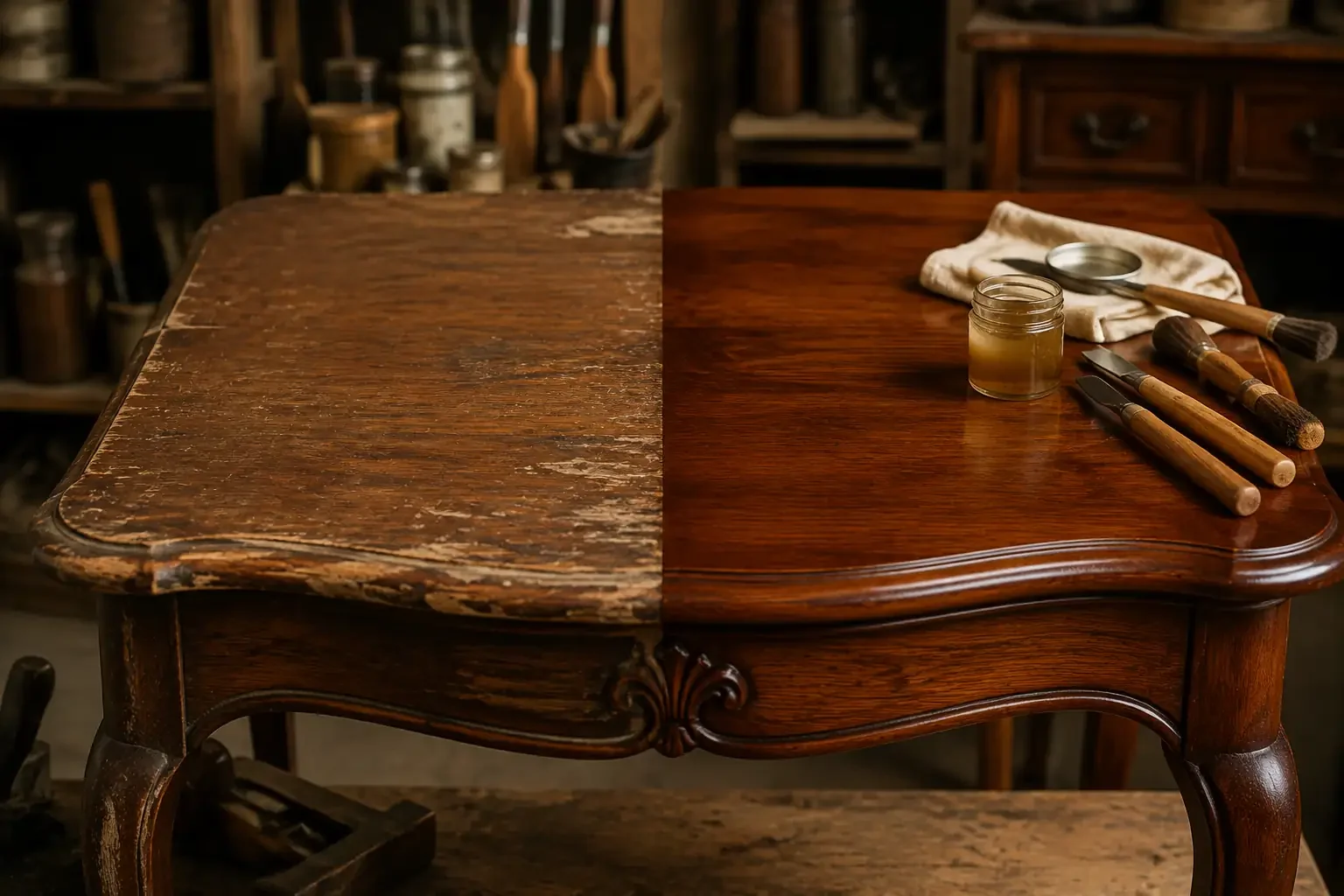
Over-sanding can permanently remove original details. Incorrect fillers may become obvious as the timber ages. Modern coatings applied without proper preparation can fail prematurely or alter the appearance of the timber in ways that are difficult to correct later.
Professional restoration follows a careful process of assessment, repair, preparation, and finishing. Every stage is completed with the goal of preserving as much original material as possible rather than replacing it for convenience. Where repairs are necessary, they should strengthen the timber while remaining visually sympathetic to the original construction.
For homes with ageing joinery, loose components, or damaged timber elements, professional furniture repair and structural restoration techniques can often preserve materials that might otherwise be discarded. Addressing structural concerns before cosmetic refinishing also helps ensure the restoration lasts for many years.
Why Choose Mid Century Restoration
Choosing the right restoration specialist is about more than finding someone who can refinish timber. It is about working with someone who understands the importance of preserving original craftsmanship and respecting the history of your home.
Why homeowners across Melbourne trust Mid Century Restoration:
More than 20 years of hands-on experience restoring original timber features using a preservation-first approach.
Every project begins with a careful assessment to determine what can be preserved before considering replacement.
Restoration techniques are selected to protect the home's character, craftsmanship, and long-term value.
Speak with Richard Lloyd About Restoring Your Original Timber Features
If your home still contains original timber flooring, wall panelling, doors, windows, beams, or handcrafted joinery, it is worth having them professionally assessed before deciding to replace them. Many original features can be restored successfully while maintaining the character that makes your home unique.
Richard Lloyd at Mid Century Restoration works with homeowners throughout Melbourne to preserve original timber using careful restoration techniques that respect the home's history and architectural style. A professional assessment can help you understand what can be saved, what requires repair, and how restoration can protect your investment for years to come.
Frequently Asked Questions
Can original timber features usually be restored?
In many cases, yes. Surface wear, faded finishes, scratches, and minor damage do not necessarily mean the timber needs replacing, as the original material underneath often remains structurally sound. A professional assessment helps determine whether restoration can preserve the timber while maintaining the home's original character and long-term value.
Is restoring original timber better than replacing it?
For many character and mid-century homes, restoration is the preferred option because it retains original craftsmanship and architectural authenticity. Replacing original timber with modern materials can alter the appearance of the home and reduce some of its historical appeal. Restoration also reduces waste and often proves to be a more sustainable long-term solution.
How do I know if my timber features need professional restoration?
If you notice fading, water marks, cracking finishes, loose joinery, movement, or visible wear, it is worth arranging a professional inspection. These issues often affect only the surface or isolated sections rather than the entire feature. Early restoration can prevent more extensive deterioration and reduce the need for larger repairs later.
How long does original timber restoration take?
The timeframe depends on the size of the project, the condition of the timber, and whether structural repairs are required before refinishing. Smaller restoration projects may be completed relatively quickly, while more detailed work involving multiple original features requires additional care. Taking the time to restore timber properly always delivers better and longer-lasting results than rushing the process.
Does restoring original timber increase property value?
Well-preserved original timber is highly regarded in many Melbourne character homes because it reflects quality craftsmanship and authentic architectural design. Buyers often appreciate homes that retain their original materials rather than replacing them with modern alternatives. While every property is different, careful restoration generally contributes to both the visual appeal and long-term value of the home.
Conclusion
Restoring your home's original timber features is about preserving far more than timber itself. It protects craftsmanship, maintains architectural character, extends the life of quality materials, and allows your home to retain the features that make it distinctive.
At Mid Century Restoration in Melbourne, every restoration project is approached with care, restraint, and respect for the original materials. Rather than replacing quality timber unnecessarily, the focus is always on preserving what already exists, strengthening it where needed, and ensuring it continues to serve future generations while maintaining the beauty and authenticity that only original timber can provide.