
Can Damaged Teak Mid-Century Furniture Be Professionally Restored?
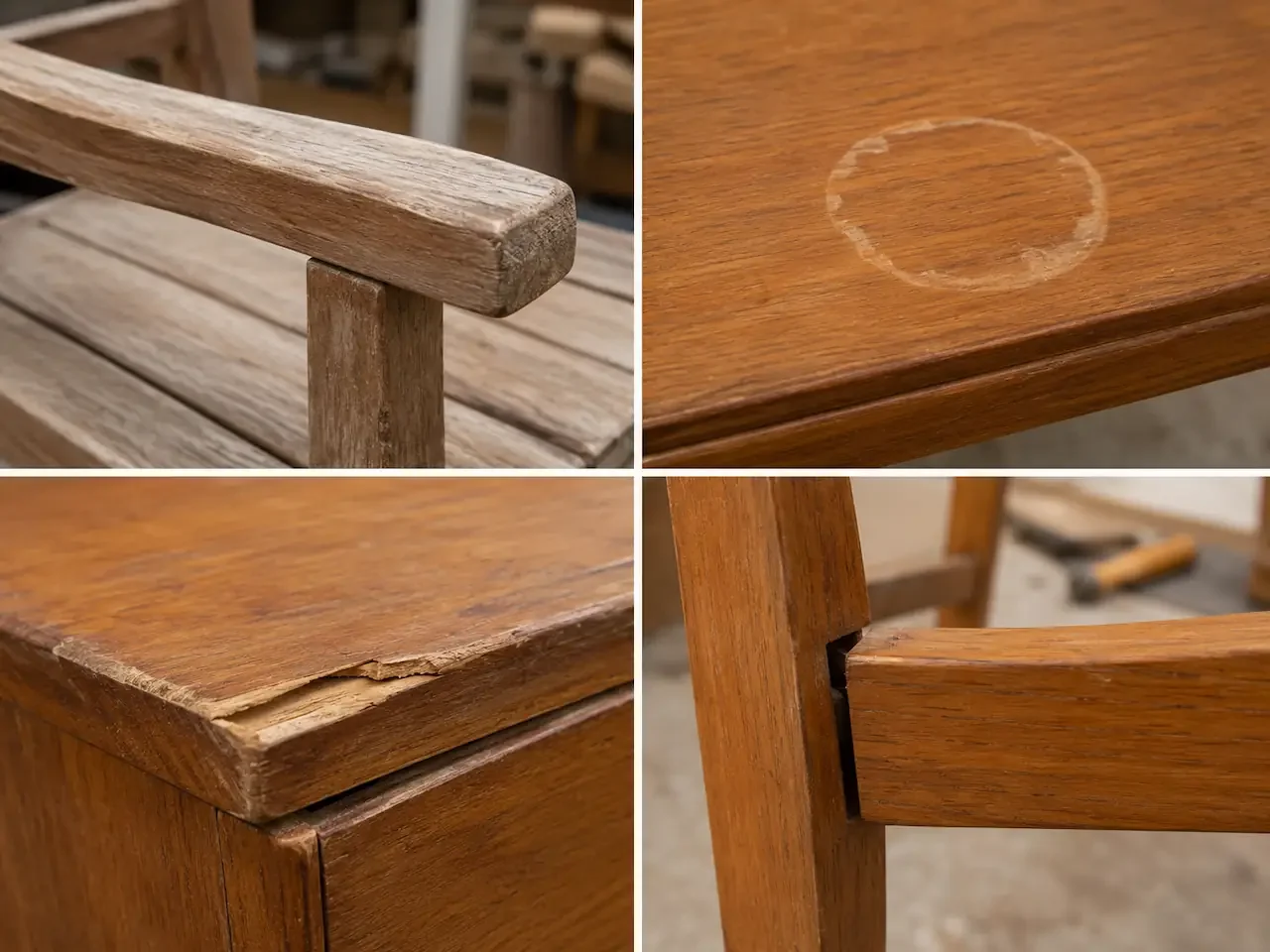
Damaged teak mid-century furniture can often be professionally restored, but what's realistic depends entirely on the individual piece. Light scratches, faded colour and a worn finish usually need controlled surface work, while lifting veneer, loose joints, splits or a failed previous repair call for something more involved.
The real question isn't whether a piece can be made to look new. It's how much of the original timber, veneer, construction and character can be kept while bringing it back to safe, practical use.
I assess every teak table, chair, sideboard or cabinet that comes into my Northcote workshop before recommending any work. Construction, existing finish, structural condition, previous repairs and how the piece will actually be used all shape what I can achieve safely. Damaged teak often has more restoration potential than it looks like it has, but an honest assessment matters more than an ambitious one. Some marks can be removed, some should only be softened, and some evidence of age is better left alone than sanded away.
Why Teak Was Widely Used in Mid-Century Furniture
Teak became closely tied to mid-century design because its warm colour, defined grain and practical performance suited the restrained style of the period. You'll find it in dining tables, coffee tables, sideboards, desks, chairs and storage pieces from Danish, British, Australian and other makers, sometimes as solid timber, sometimes as veneer, often both in the same piece.
Teak holds natural oils and generally performs well as a furniture timber, but that doesn't make it indestructible. Decades of sunlight, cleaning products, moisture, heat and daily use gradually wear down the finish and exposed surface, and joints loosen as old adhesives age and furniture gets moved and loaded over the years. A sideboard can look perfectly fine while it's quietly coming apart underneath, and the opposite happens just as often, a faded or scratched table with a frame that's still completely sound.
One of the most important things I check early is whether the visible surface is solid timber or veneer. A lot of quality mid-century pieces used veneer intentionally, it let makers control grain direction and keep consistent panels without wasting timber. The catch is that the decorative layer can be thin, and aggressive sanding cuts straight through it and exposes what's underneath. A method that's perfectly safe on a solid teak edge can ruin the veneered panel right beside it.
What Types of Teak Damage Can Actually Be Restored
Most pieces I see have more than one problem at once, a faded surface, a joint that's started to move, and an old coating hiding the real colour underneath. What I can typically address includes:
Light or moderate scratches, dents, water rings, stains, faded areas and worn coatings
Loose joints, unstable legs, moving frames, cracked components and weakened supports
Lifting or chipped veneer, damaged edges, minor splits and failed previous repairs
Inappropriate dark stains, thick coatings, uneven finishes and surface contamination
Missing or damaged hardware where a suitable repair or replacement exists
Having one of these doesn't automatically mean full correction is possible. The depth, location and cause of the damage all decide that.
Can Scratched Teak Furniture Be Restored?
Most scratches can be reduced significantly, but how far depends on how deep the damage runs. A light scratch usually sits in the existing finish, so controlled cleaning, levelling or finish blending improves it without removing much timber. A deeper scratch that's gone through the coating and into solid timber or veneer is a different story, chasing complete removal there could mean more sanding than the piece can safely take.
I'd rather reduce the contrast of a deep mark and keep the veneer intact than sand until it disappears and risk exposing the panel underneath. That balance between appearance and permanent alteration matters more than making every mark invisible.
Can Water-Damaged Teak Furniture Be Repaired?
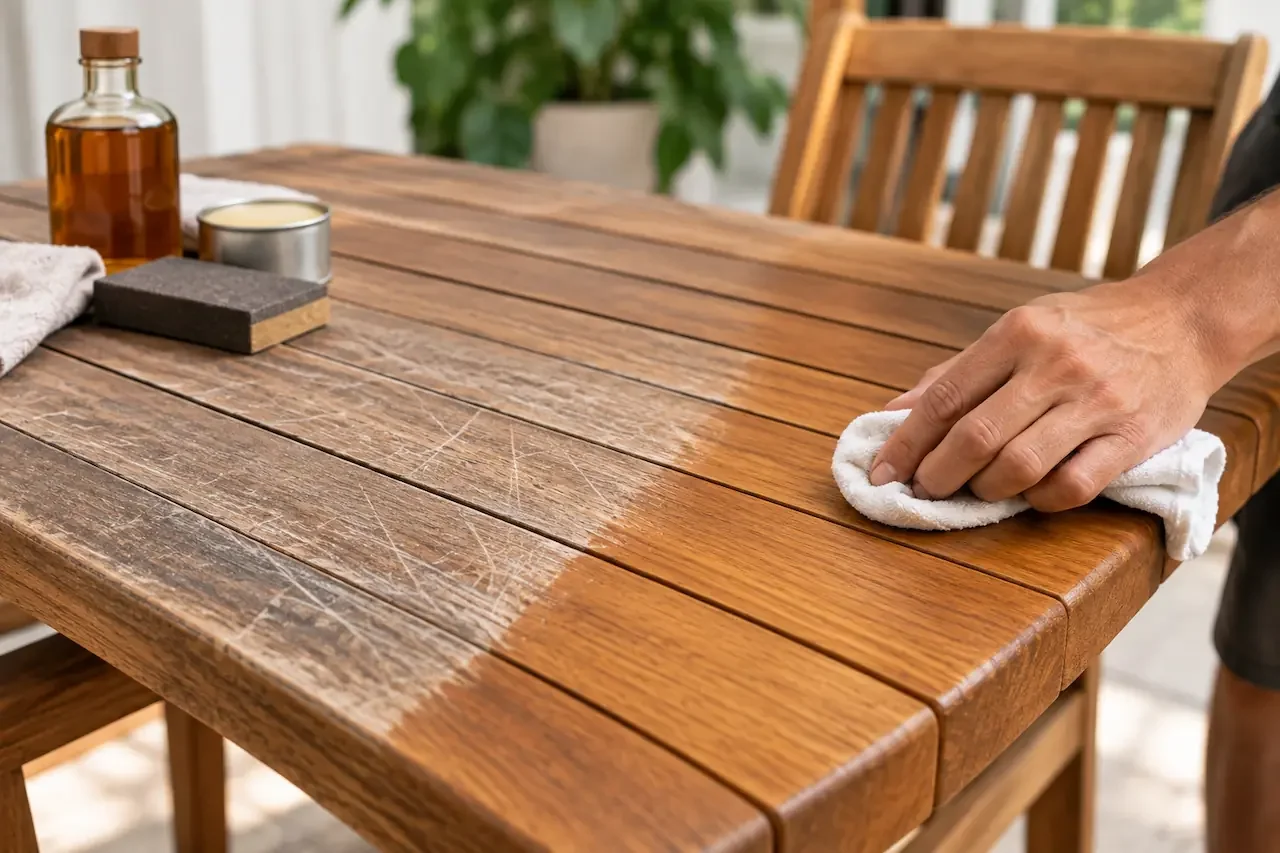
Water damage shows up as white rings, dark stains, raised grain, lifting veneer, swelling or a changed finish, and how restorable it is depends on where the moisture actually travelled and how long it sat there. A mark trapped in the coating is mostly a finish problem. Moisture that's reached veneer glue lines, joints or the material underneath needs a more involved response.
Light water rings often come from moisture or heat affecting the coating rather than staining the timber itself, and I test the area before treating it, since using a strong product without knowing the coating can spread the damage or leave a permanent colour difference. When moisture reaches a veneer glue line and the surface bubbles or lifts, pressing it flat doesn't fix anything on its own, the area needs stabilising, cleaning and re-adhering under controlled pressure, with any trapped moisture given time to dissipate before refinishing. Swollen drawers or panels shouldn't be forced or sanded straight away either, since the dimensions can shift again as the material settles. For more on this, I've written a separate guide on repairing scratches, water damage and stains on wooden furniture.
Can Sun-Faded or Dry-Looking Teak Be Restored?
Teak near windows often fades unevenly, one section staying dark under an ornament while the surrounding timber pales, or cabinet doors ageing differently to interior shelves that get little light. Faded colour doesn't necessarily mean the timber has failed, it often means the finish has degraded or maintenance has been inconsistent over the years.
I never rely on a heavy dark stain to fix this. The surface gets cleaned and assessed first so I understand the real colour variation, then a test area shows how the timber responds to controlled preparation and finishing. Some tonal variation usually stays, since different sections have aged at different rates, and the goal is visual balance, not making the piece look artificially uniform. A pale or dull surface has often had wax, polish or oil applied over the years too, and I identify those layers before choosing a refinishing system, since a new product over the wrong existing coating leads to poor adhesion or patchy absorption.
Structural Damage Needs Fixing Before Refinishing
Loose joints, moving legs and weakened frames need more than a cosmetic pass. A newly refinished chair is still unsafe if the joints underneath are loose, and a polished table will keep moving if its rails or connection points have failed. I always deal with structural work before the final surface work, since disassembly, alignment and clamping can disturb a finish that's already gone on.
Gluing around the outside of a loose joint might reduce movement temporarily, but it doesn't restore the original fit if failed adhesive or contamination remains inside. Where it's appropriate, I disassemble the joint carefully, remove the old adhesive, inspect the components and repair the joint properly before reassembling it. Cracks and splits get the same individual treatment, a small stable split and an active structural crack aren't the same problem, and I check whether it's moving, whether it affects a load-bearing section, and whether an earlier repair has already changed the surrounding timber before deciding on consolidation, reinforcement or a matched insert.
How Professional Teak Restoration Works
I build the process around the piece in front of me rather than a fixed package. A typical job runs through:
Condition assessment, examining the timber, veneer, joints, hardware, existing coating and previous repairs, and discussing what the piece will be used for
Documentation and testing, recording marks, labels and construction details, and testing cleaning or finishing methods in a concealed area
Cleaning and stabilisation, removing surface contamination and addressing any active moisture, lifting veneer or unstable components
Structural restoration, correcting loose joints, cracked parts and failed earlier repairs before any final surface prep
Controlled refinishing, removing inappropriate coatings only as far as necessary and treating scratches, stains and colour variation without excessive timber loss
Finish application and inspection, applying a compatible finish in controlled stages, followed by curing, alignment checks and aftercare advice
Not every piece needs all six stages. A structurally sound cabinet might only need cleaning and refinishing, while an unstable chair could need substantial joint work before its appearance even comes into it. I stay flexible enough to respond to whatever shows up once I've actually started taking the piece apart.
Choosing the Right Finish for Restored Teak
The finish decides colour, sheen, texture, protection and how much maintenance the piece will need going forward, and I choose it based on the material, condition, original appearance and intended use, not a default. A table used daily needs different protection to a display cabinet that rarely gets touched.
Oil-based finishes get associated with teak a lot, but oil isn't automatically right for every piece, some furniture originally used lacquer or another film-forming finish, and applying oil over the wrong existing coating leads to patchy absorption. Mid-century furniture generally does better with a restrained surface that lets the timber and proportions stay visually dominant, heavy gloss or thick stain can make a refined piece look coated rather than restored. I've gone into more detail on this in my guide to choosing a finish for mid-century furniture restoration.
Will Restoration Change the Furniture's Character?
Good restoration improves condition without unnecessarily erasing age. A piece doesn't need to look newly manufactured to look cared for, gentle colour variation, small stable marks and softened edges are often part of its history rather than a flaw to fix.
I draw a clear line between patina and deterioration. Patina is stable evidence of use and age. Deterioration is active veneer lifting, failing joints, water ingress, unstable cracks and coatings that have stopped protecting the surface. Original handles, labels, drawer runners and structural components all contribute to a piece's authenticity, and I only replace something when it's missing or unsafe, not as a default first move, repairing an original part usually preserves more of the piece's history than swapping in a generic replacement.
It's also worth being upfront that restoration doesn't guarantee higher market value. It protects condition, usability and presentation, but selling price depends on maker, rarity, provenance, demand and the quality of any earlier work. My aim is to avoid unnecessary alterations and keep future options open, not promise a return.
Is Your Teak Furniture Worth Restoring?
A piece doesn't need a famous designer label to justify the work. The decision usually comes down to construction quality, usefulness, replacement cost or sentimental value, and how well it suits the space it's going back into. A well-built table can be worth restoring despite heavy surface wear, a family sideboard often justifies careful work simply because it can't be replaced, and an original chair might need structural repair but still hold onto important design qualities. A piece that's already been sanded through, heavily altered, or weakened beyond practical repair is a different conversation, and I'll say so honestly if that's what I'm looking at.
Professional Restoration vs DIY Repair
Routine dusting and basic surface care are fine to do at home. Full restoration is different, it can permanently alter the timber, veneer, joints and coating if it goes wrong. Machine sanding is the biggest risk here, it can strip veneer quickly, round off defined edges and create low spots that only become obvious once the finish goes on. Incorrect adhesives cause their own problems too, modern screws or expanding glues can restrict movement, split timber or make later disassembly impossible.
DIY becomes genuinely risky once veneer, an unknown finish, structural instability or sentimental value are involved. Professional restoration isn't really about having better tools, it's about knowing how far to take something, when to stop, and which signs of age are worth keeping rather than sanding out.
Caring for Teak Furniture After Restoration
A restored finish adds protection, but the piece still needs the right ongoing care. Use coasters, placemats and protective pads on surfaces that get regular use, wipe up spills with a soft cloth rather than letting moisture sit, keep the piece out of prolonged direct sunlight where you can, and avoid abrasive cleaners, silicone-heavy polishes or unknown oils.
Don't reach for a maintenance product just because the timber looks a little dry, that dryness often comes from the coating rather than a lack of oil, and using the wrong product can create contamination or patchiness that's harder to fix later than the original dryness ever was.
The Best Restoration Is Based on Restraint
Damaged teak mid-century furniture can often be restored successfully, but I won't promise the same outcome for every piece that comes through the door. It depends on whether the damage sits in the finish, the timber, the veneer, the joints or the internal structure, and how much original material is actually left to work with. A preservation-focused approach doesn't chase perfection, it restores stability, improves damaged surfaces and protects the piece's future use while keeping its character wherever that's realistic. Honest assessment is always the first step, before anything irreversible happens.
Ask Richard Lloyd About Your Teak Furniture
Photographs are a useful starting point before a piece comes to the workshop. Clear images of the whole piece, damaged surfaces, joints, legs, edges, undersides, labels and any signs of previous repair, plus a few wider shots that show its proportions, tell me most of what I need before I even see it in person.
I personally assess every teak and mid-century restoration project that comes through my Northcote workshop. Send through your photos and we can work out whether refinishing, structural repair or something more limited is the right call, before any irreversible work begins.
FAQs
Can badly damaged teak mid-century furniture still be restored?
Sometimes. Significant scratches, failed finishes, loose joints and localised veneer damage can often still be repaired. It depends on how deep the damage goes, how much original material is left, any previous repairs, and whether the underlying structure is sound enough to build on.
Can water-damaged teak furniture be restored?
Many water marks and finish-related problems can be reduced significantly. Deeper moisture damage involving lifting veneer, swollen components or failed joints needs stabilisation and structural work first, and the piece should never be sanded before the damage has been properly assessed.
Does restoration increase the value of mid-century furniture?
It can help protect condition and usability, but it doesn't guarantee a higher market value. Value depends on the maker, rarity, provenance, originality, demand, and the quality of both earlier and current restoration work.
Can sun-faded teak regain its colour?
Often, yes, through controlled cleaning, surface preparation and the right finish. Some colour variation usually remains, since different areas of the piece have been exposed to different amounts of light over the years.
Can loose teak furniture joints be repaired permanently?
Most loose joints can be repaired properly once the failed connection has been assessed, cleaned, realigned and reassembled. Simply adding glue around the outside is less reliable, since it doesn't address worn material, old adhesive or poor alignment inside the joint itself.