
How to Restore Original Timber Panels in a Mid-Century Modern Home
Original timber panels are one of the most important features in a mid-century modern home. They add warmth, texture, depth, and a strong connection to natural materials. In many homes built from the 1950s to the 1970s, timber wall panels were not added as decoration. They were part of the original architectural character.
Over time, these panels can become faded, scratched, stained, dry, loose, or affected by moisture and sunlight. Homeowners often ask me how to restore original timber panels without losing the grain, colour, patina, and character that make the home feel authentic.
At Mid Century Restoration in Melbourne, I approach timber panel restoration with care and restraint. The goal is not to make the panels look newly installed. The goal is to preserve the original timber, repair damage where needed, restore warmth, and keep the mid-century feeling of the home intact.
What I Check Before Restoring Timber Panels
Before any sanding, cleaning, or finishing begins, I inspect the timber panels carefully. I look at the timber species, surface finish, grain direction, moisture marks, fading, scratches, fixings, movement, cracks, old coatings, and any signs of previous repair work.
This matters because original timber panels can be difficult to replace accurately. The timber, tone, panel width, installation method, and ageing pattern all contribute to the home’s character. If restoration is too aggressive, the panels can lose the warmth and subtle variation that made them special in the first place.
Through workshop and home restoration experience, I have seen that the best results usually come from controlled cleaning, minimal sanding, careful repair, and finishes that respect the original look rather than covering it.
Why Timber Panels Are Important in Mid Century Modern Homes
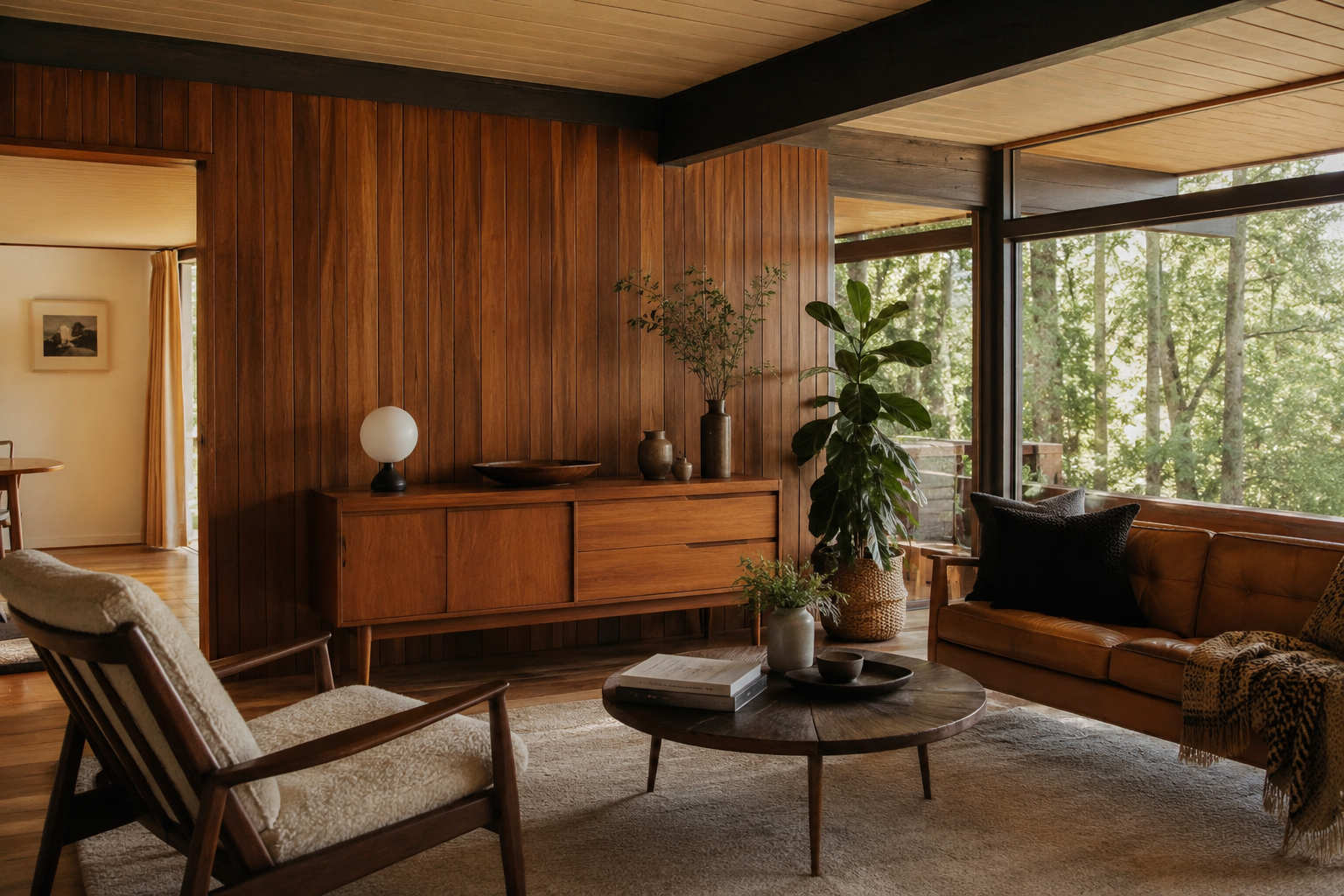
Timber panels were a key feature of mid-century modern architecture. They helped create warm, natural interiors and often connected the inside of the home with the landscape outside. In many Melbourne mid-century homes, timber panels were used to create calm, simple, and balanced spaces.
The timber was usually left visible rather than painted. This allowed the grain, colour, and natural variation to become part of the interior design. The panels were often selected and installed with clean lines, careful spacing, and a strong sense of proportion.
Removing, painting, or covering original timber features can change the entire feel of a home. Restoration allows homeowners to keep the original design intent while improving worn, faded, or damaged surfaces.
Common Problems Found in Original Timber Panels
Original timber panels age slowly over many years. Some ageing is part of their character, but other changes may need professional attention before the damage becomes harder to correct.
Common problems include fading, dry timber, scratches, dents, water marks, dark staining, swelling, cracked surfaces, loose panels, old coating build-up, and uneven colour. Sunlight can reduce depth and warmth in the timber, while moisture can cause staining, movement, or surface damage.
In some homes, the panels may also loosen because of building movement, ageing fixings, or earlier repair work. A professional assessment looks at both appearance and stability so the restoration plan protects the timber instead of simply improving the surface.
Can Original Timber Panels Be Restored Instead of Replaced
In most cases, original timber panels are worth restoring instead of replacing. Many mid-century homes used timber that has better grain, depth, and character than many modern alternatives.
Replacement can create problems. New timber may not match the original tone, grain, width, age, or installation pattern. Even when the replacement timber is high quality, it can still look disconnected from the rest of the home.
Restoration keeps the original material in place wherever possible. A professional assessment can confirm whether the panels are stable, whether the finish can be revived, and whether damaged areas can be repaired without removing more timber than necessary.
Understanding the Type of Timber Used
Before restoration begins, it is important to understand what type of timber is present. Mid-century homes may include teak, oak, walnut, blackwood, cedar, or other native hardwoods depending on the era, builder, and interior design.
Each timber responds differently to cleaning, sanding, oiling, staining, and finishing. Some timbers contain natural oils. Others absorb finish quickly or show scratches more easily. Veneered panels also need extra care because the surface layer can be thin.
Identifying the timber helps prevent damage. It also helps choose the right restoration method so the final result enhances the grain, colour, and character instead of making the panels look flat or overworked.
The Professional Timber Panel Restoration Process
Mid-century modern interiors need a careful and specialist approach. At Mid Century Restoration in Melbourne, I focus on preserving original timber features rather than covering or replacing them unnecessarily.
Restoring original timber panels is a staged process. It should not be rushed, because each step affects the final appearance, durability, and authenticity of the home.
The first step is assessment. I examine the timber type, existing finish, scratches, stains, moisture marks, fixings, panel movement, colour variation, and previous repair work. This helps decide what can be preserved and what needs correction.
Next comes controlled cleaning. Years of dust, smoke residue, oils, polish, and old treatments may need to be removed carefully. This reveals the true condition of the timber beneath the surface.
Surface correction follows. Light sanding or hand preparation may be used, but only where needed. The goal is to preserve as much original material as possible.
The final stage is finishing. The finish should restore warmth, protect the timber, and suit the mid-century style of the home. It should not make the panels look plastic, overly glossy, or newly manufactured.
Restoring Faded Timber Panels
Faded timber panels are one of the most common issues in mid-century homes. Sun exposure can reduce colour depth, dry the surface, and create uneven tones across a wall.
Restoration can often improve faded timber panels by removing degraded surface build-up, cleaning the grain, reducing unevenness, and applying a suitable finish. The aim is not to make the panels look brand new. The aim is to restore warmth and depth while keeping the original character.
A carefully chosen finish also helps protect the timber from future fading. This allows the panels to age more gracefully instead of continuing to look dry, flat, or washed out.
Repairing Scratches and Surface Damage
Scratches, dents, scuffs, and small marks are common in older homes. The key is to reduce the damage without overworking the timber or removing more surface than necessary.
In professional timber panel restoration, repairs need to blend with the surrounding grain and colour. This may involve controlled cleaning, localised repair, careful sanding, colour balancing, or finish adjustment.
In many cases, surface damage can be improved without removing large amounts of material. This protects the integrity of the original panels and helps the repaired areas sit naturally within the room.
Addressing Moisture and Staining Issues
Moisture damage needs careful assessment before any surface work begins. Simply sanding over stains does not solve the cause of the problem and may make the surface uneven.
The first step is to understand where the moisture came from. It may be linked to poor ventilation, leaks, nearby wet areas, previous cleaning methods, or long-term humidity. If the cause is not addressed, the staining or movement can return.
Once the source is understood, stains can be treated using methods suited to the timber. The aim is to reduce harsh marks, stabilise affected areas, and keep the natural variation of the panels intact.
Preserving the Original Finish and Patina
Patina is part of what gives mid-century interiors their character. It reflects age, use, natural timber movement, and the history of the home.
Restoration should not remove every sign of age. Some marks can be softened, while others should remain as part of the room’s story. The skill is knowing what to correct and what to preserve.
A preservation-focused approach keeps the panels looking authentic. It improves the overall appearance while still allowing the timber to feel original, warm, and connected to the era of the home.
Why DIY Timber Panel Restoration Is Risky
DIY timber panel restoration can seem simple, but it carries real risk. Timber wall panels are often fixed in place, difficult to replace, and highly visible within the room. A mistake can affect the whole interior.
Incorrect sanding can remove grain detail, flatten the surface, damage veneer, or create uneven colour. Harsh cleaners can stain the timber or raise the grain. Modern coatings can make original panels look too glossy, too dark, or disconnected from the rest of the home.
Professional restoration reduces these risks because the method is chosen after assessment. The goal is to improve the timber without causing irreversible changes.
How Long Timber Panel Restoration Takes
The time required for timber panel restoration depends on the size of the area, the condition of the panels, the type of finish, and whether repairs are needed.
A simple clean and refinish may be more straightforward, while moisture damage, loose panels, deep scratches, or uneven colour correction can take longer. Timber also needs time to respond between cleaning, preparation, and finishing stages.
Quality restoration should not be rushed. Allowing each stage to settle properly helps create a more durable and natural-looking result.
Environmental Benefits of Restoring Original Timber Panels
Restoration is a sustainable choice. It reduces waste and avoids the environmental impact of removing and replacing materials.
Original timber panels are often made from slow growing hardwoods. Preserving them respects both history and natural resources.
Choosing restoration supports responsible home improvement practices.
How Restored Timber Panels Transform a Home
Restoring original timber panels is a sustainable choice because it keeps existing materials in use. Instead of removing well-made timber and replacing it with new products, restoration extends the life of what is already part of the home.
Many older timber panels were made from quality hardwoods that are difficult to match today. Preserving them respects both the natural material and the design history of the property.
Choosing restoration also reduces waste and helps maintain the architectural character of the home. It is a responsible way to improve the interior without losing what makes it unique.
Final Thoughts on Restoring Original Timber Panels
The best results come from understanding the timber first. Restoration should respect the grain, colour, installation style, patina, and design intent of the home.
Original timber panels are one of the most valuable features in a mid-century modern home. With careful restoration, they can often be preserved, strengthened, and visually improved without losing authenticity.
For homeowners who value original character and craftsmanship, restoring timber panels is usually a better decision than replacing or covering them.
Conclusion
Restoring original timber panels in a mid-century modern home is usually possible when the timber is assessed and handled carefully. These panels were designed to be part of the home’s architecture, not simply a decorative surface.
Professional restoration can improve fading, scratches, moisture marks, worn finishes, and loose sections while still respecting the original material and design intent.
Replacing or covering original panels can permanently change the feel of a home. Restoration gives homeowners a way to preserve warmth, character, and craftsmanship while improving durability and everyday enjoyment.
Why Choose Us for Mid Century Timber Panel Restoration
My experience with mid-century homes helps me understand how these panels were installed, finished, and intended to feel within the room. I use methods that protect grain, tone, proportion, and original character while improving durability and appearance.
Every project begins with careful assessment. I restore only what is needed and protect as much original material as possible. The goal is not to modernise the home beyond recognition. The goal is to preserve what makes it timeless.
When you choose Mid Century Restoration, you are choosing careful workmanship, honest advice, and respect for the original timber features in your home.
If your original timber panels are faded, scratched, stained, loose, or affected by moisture, it is worth getting them assessed before sanding, painting, or replacing them. Contact Richard Lloyd at Mid C?entury Restoration in Melbourne to discuss the safest way to restore your timber panels while protecting the character of your home.
Frequently Asked Questions
Can all original timber panels be restored?
Most original timber panels can be restored when the timber, veneer, backing material, and fixings remain structurally sound. Panels affected by fading, light scratches, stains, dryness, worn finishes, or minor surface damage are often strong candidates for professional restoration. Localised cracks, loose edges, and small damaged sections may also be repairable without replacing the entire installation.
The final result depends on the timber species, panel construction, previous treatments, and severity of the damage. A professional assessment can identify whether the panels are solid timber or veneer, check for moisture or structural issues, and determine the safest restoration method. Severely delaminated, rotted, or missing sections may require sympathetic repair or selective replacement.
Will restoration remove the original character of the panels?
No. Professional timber panel restoration should preserve the original grain, tone, patina, texture, and natural variation wherever possible. The objective is not to make older panels look completely new or remove every visible sign of age. Instead, the process should improve their condition while respecting the materials and architectural character of the interior.
A careful restorer will use controlled cleaning, restrained sanding, localised repairs, colour matching, and an appropriate protective finish. Original edges, panel spacing, timber patterns, and variations in colour should be retained. This sympathetic approach allows the restored panels to look refreshed and well maintained without appearing artificial or disconnected from the home’s history
Is it cheaper to restore timber panels or replace them?
Restoration is often more practical and cost-effective when the existing panels are structurally sound and original to the home. Complete replacement may involve removing the panels, repairing the underlying wall, sourcing matching timber, installing new material, and finishing the entire area. These additional labour and material costs can make replacement more expensive than expected.
Replacement can also affect the visual authenticity of a mid-century interior. New panels may have different grain patterns, colours, dimensions, spacing, or surface textures. Restoring the original timber helps retain the craftsmanship and architectural continuity of the space. However, the best option should be determined after assessing the extent of damage and the amount of repair work required.
How long does timber panel restoration take?
The timeframe depends on the total surface area, panel condition, timber type, access, repair requirements, and selected finish. A smaller area with light fading and surface wear may require less time, while extensive wall panelling with scratches, water damage, loose sections, or previous coatings will need a longer and more detailed process.
Professional restoration may involve cleaning, testing, repairs, surface preparation, colour correction, and several finish applications. Drying and curing time may also be required between coats. Quality restoration should not be rushed because uneven preparation or insufficient drying can affect the final colour, adhesion, and durability of the finish. An inspection is usually necessary to provide an accurate timeframe.
Can timber panels be restored while living in the home?
In many cases, timber wall panels can be restored while the occupants remain in the home. The work may be divided into sections to keep essential rooms accessible and reduce disruption. A professional restorer can advise on furniture protection, access requirements, ventilation, drying times, and the safest schedule for completing each stage.
Some dust, odour, and temporary room restrictions may still occur, particularly during sanding or finishing. Dust-control equipment, protective coverings, low-odour products, and careful work-area isolation can make the process more manageable. For larger projects, heavily damaged panels, or finishes requiring extended ventilation, temporary access restrictions may be recommended.
Do restored timber panels require special maintenance?
Restored timber panels generally require straightforward maintenance rather than specialist treatment. Regular dusting with a soft cloth and occasional gentle cleaning can help prevent dirt from building up on the surface. Cleaning products should be suitable for the specific finish, and excess water should be avoided because moisture can affect timber, veneer, joints, and adhesives.
Direct sunlight, high humidity, harsh chemicals, abrasive pads, and furniture polish containing silicone may gradually damage or discolour the finish. Curtains, blinds, and controlled indoor humidity can help protect the panels. Following the restorer’s care recommendations will preserve the colour, surface protection, and natural appearance of the timber for longer.
Is professional restoration necessary for timber panels?
Professional restoration is strongly recommended for original, veneered, valuable, or architecturally significant timber panels. An experienced restorer can identify the timber type, existing finish, panel construction, previous repairs, and underlying causes of damage before beginning treatment. This reduces the risk of choosing an incompatible cleaner, stain, adhesive, or coating.
Professional methods also provide greater control over sanding, colour matching, repairs, and finish application. Original timber panels can be difficult or costly to replace once damaged. Specialist restoration helps preserve the grain, dimensions, panel alignment, and overall interior character while delivering a more consistent and durable long-term result.
Is DIY timber panel restoration a bad idea?
DIY restoration can be risky, particularly when working with original mid-century panels or thin timber veneer. Excessive sanding may cut through the veneer, flatten the grain, round panel edges, or create uneven colour. Harsh cleaners and chemical strippers can stain the timber, weaken adhesives, or damage the original surface.
Applying unsuitable oils, stains, varnishes, or thick coatings can also make the panels appear darker, patchy, glossy, or artificial. These mistakes may be difficult or impossible to reverse without removing more original material. Basic dusting and careful cleaning may be appropriate at home, but repairs, sanding, colour correction, and refinishing are generally safer in professional hands.
Can faded timber panels be restored?
Yes. Faded timber panels can often be improved through professional restoration, particularly when the fading is caused by sunlight, dryness, surface wear, or deterioration of the original finish. The process may include controlled cleaning, light surface preparation, colour balancing, timber conditioning, and the application of a compatible protective finish.
The aim is to restore warmth and improve colour depth without making the panels look overly dark or newly installed. Some natural variation may remain, especially where different sections have received unequal sunlight exposure over many years. Careful colour matching and restrained treatment can create a more balanced appearance while preserving the timber’s authentic grain and aged character.