
Why Craftsmanship Matters in Mid-Century Furniture Restoration
Finding an original mid-century piece can be exciting. It may be a Parker sideboard, a set of Fler dining chairs, a teak cabinet or an unmarked Australian-made piece with strong proportions and carefully constructed details.
The next decision is more important than many owners realise. Choosing the wrong restoration approach can alter the timber, weaken the structure, obscure original details or leave the furniture looking heavily refinished. Selecting the right mid-century furniture restorer in Melbourne is therefore not simply about finding someone who can sand and apply a new coating.
Specialist restoration requires an understanding of how furniture from the 1950s to the 1970s was designed, assembled and finished. It also requires restraint. The goal should not be to make an older piece look newly manufactured. It should be to restore stability and visual balance while preserving the materials, craftsmanship and signs of age that belong to the furniture.
At Mid Century Restoration in Northcote, I assess every piece individually. Timber type, veneer thickness, joints, previous repairs, existing coatings and intended use all influence the work. A method that suits one dining table may be entirely inappropriate for another.
This article explains why craftsmanship matters, what a specialist should assess and how Melbourne owners can choose a restorer capable of protecting the long-term integrity of their furniture.
Mid-Century Furniture Requires Specialist Knowledge
Mid-century furniture often appears visually simple, but that simplicity depends on precise proportions, controlled joinery and carefully selected materials.
Tapered legs, thin edges, floating tops, recessed bases and clean cabinet lines leave little room for careless repair. A small change to an edge profile or leg angle can affect the character of the whole piece.
A general furniture repairer may be highly capable in other areas, but mid-century work presents particular risks. Veneer can be mistaken for solid timber. An original oil or lacquer surface may be covered with an incompatible coating. Structural movement may be concealed beneath an attractive exterior.
A specialist needs to read the furniture before changing it.
Understanding Australian Mid-Century Construction
Furniture made or sold in Australia during the mid-century period may contain teak, blackwood, Queensland maple, walnut, oak, beech or mixed hardwoods. Some pieces use solid timber throughout, while others combine solid frames with veneered panels.
Recognising this distinction is critical. Solid timber can sometimes tolerate controlled surface correction that would permanently damage thin veneer.
Construction also varies between makers and furniture types. Chairs may rely on dowels, mortise-and-tenon joints or shaped rails. Sideboards may include veneered doors, solid timber edging and engineered internal panels. Imported Danish pieces may differ from locally produced Australian furniture even when their overall design language appears similar.
A specialist does not assume that every mid-century piece was built in the same way.
Previous Work Must Be Identified
Many pieces have already been repaired or refinished at least once.
Modern screws may have been driven through loose joints. Brackets may have been added underneath frames. Veneer may have been filled rather than stabilised. Dark stain may conceal uneven sanding or water damage.
These interventions affect what can safely be done next. A restorer must determine which materials are original, which were added later and whether an earlier repair is supporting or damaging the furniture.
Restoration Begins With Assessment, Not Sanding
One of the clearest differences between specialist work and basic refinishing is what happens before any abrasive touches the surface.
A professional assessment should consider the entire piece rather than focusing only on visible scratches or fading.
The restorer should examine:
Timber species, veneer thickness, grain direction and original edge details
Loose joints, frame movement, splits, failed glue and previous structural repairs
Existing coatings, stains, polish residue, discolouration and surface contamination
Labels, stamps, hardware and construction details that should be protected
The owner’s intended use, expectations and reasons for restoring the furniture
This assessment determines whether the piece needs structural repair, localised surface work, full refinishing or only careful cleaning and conservation.
Cosmetic Wear and Structural Damage Are Different
A piece can look tired but remain structurally sound. It can also look attractive while its joints and frame are beginning to fail.
Faded colour, light scratching and dullness are largely surface concerns. Movement in legs, rails, chair backs, drawer supports or cabinet bases indicates a structural problem.
Treating these conditions in the wrong order creates poor results. Refinishing an unstable chair may improve its appearance, but it does not make the chair safe. A failing joint may also need to be disassembled later, disturbing the newly finished surface.
The correct sequence is generally to resolve structural integrity first and refine the appearance afterwards.
Structural Craftsmanship Protects Long-Term Use
Mid-century furniture was often designed to appear light and refined. That visual lightness places significant responsibility on joints and hidden support structures.
A narrow chair rail or tapered leg may carry substantial weight. Once its joint loosens, movement can damage the surrounding timber and make a future repair more complex.
Loose Joints Need Proper Diagnosis
Adding glue around the outside of a moving joint rarely restores the original fit. Old adhesive, worn timber, contamination or poor alignment may prevent the joint from closing correctly.
The affected section may need controlled disassembly. Old adhesive can then be removed, the joint inspected and the original geometry restored before reassembly and clamping.
Some joints require reinforcement or carefully fitted replacement material. The objective is not to add as much new material as possible. It is to restore strength while keeping the original construction intact wherever practical.
Specialist furniture repair and structural restoration is particularly important for chairs, tables and storage furniture that feel loose, lean under pressure or show evidence of an earlier temporary repair.
Repairs Should Respect the Original Design
A strong repair can still be inappropriate if it changes the furniture’s appearance, balance or movement.
Large metal brackets, visible screws and oversized replacement components may stabilise a piece temporarily, but they can interfere with its design and damage surrounding timber.
Craftsmanship involves finding a repair that suits the original materials and construction. The finished result should feel structurally resolved without appearing unnecessarily altered.
Veneer Restoration Demands Restraint
Veneer is not an inferior substitute for timber. It was an intentional material choice in many well-designed mid-century pieces.
Quality veneer allows a maker to control grain pattern, reduce movement and create visually consistent cabinet fronts or tabletops. The problem is that the decorative timber layer may be much thinner than it appears.
Aggressive sanding can cut through the veneer and expose the substrate below. Once this happens, the original surface cannot simply be recreated by applying more finish.
Every Surface Does Not Need to Be Stripped
A common misconception is that restoration must begin by removing the entire existing finish.
In some cases, complete finish removal is appropriate. In others, the existing surface may be stable enough for cleaning, localised correction or careful blending.
The decision depends on the condition of the coating, its compatibility with the timber and whether it is original or a later addition.
A specialist tests the surface and begins with the least aggressive suitable method. This protects veneer thickness, crisp edges and original details that could otherwise be lost.
Deep Damage May Need to Remain Slightly Visible
Not every scratch, stain or impact mark can be eliminated safely.
A deep scratch across thin veneer may require the removal of too much material if complete invisibility is the goal. Reducing its contrast while retaining the surface may be the more responsible solution.
Good restoration is not measured by how completely age has been erased. It is measured by whether the furniture feels stable, balanced and appropriate after the work is complete.
The Finish Must Suit the Furniture
The final coating affects the timber’s colour, sheen, texture, protection and future maintenance. It should therefore be selected according to the individual piece rather than a fixed workshop formula.
Oil, shellac, lacquer and other finishing systems behave differently. They also create different levels of surface build and visual depth.
There is no single product that is automatically correct for all furniture from the mid-century period.
Thick Modern Coatings Can Alter Character
A heavy coating may provide a durable surface, but durability alone does not determine suitability.
Thick, highly reflective finishes can flatten the appearance of the grain, soften visual details and make vintage timber feel sealed beneath a synthetic layer. Dark stains can also obscure the natural variation that gives teak, blackwood and other timbers their character.
The chosen finish should support the material rather than dominate it.
Through careful teak and timber furniture refinishing, the existing coating, timber condition and intended use can be assessed before surface preparation begins.
Application Requires Control and Patience
Even a suitable finish can perform poorly when preparation or application is rushed.
Dust control, surface cleanliness, drying conditions and time between coats all influence the outcome. Applying too much product at once can create uneven sheen, trapped contamination or a surface that takes longer to cure.
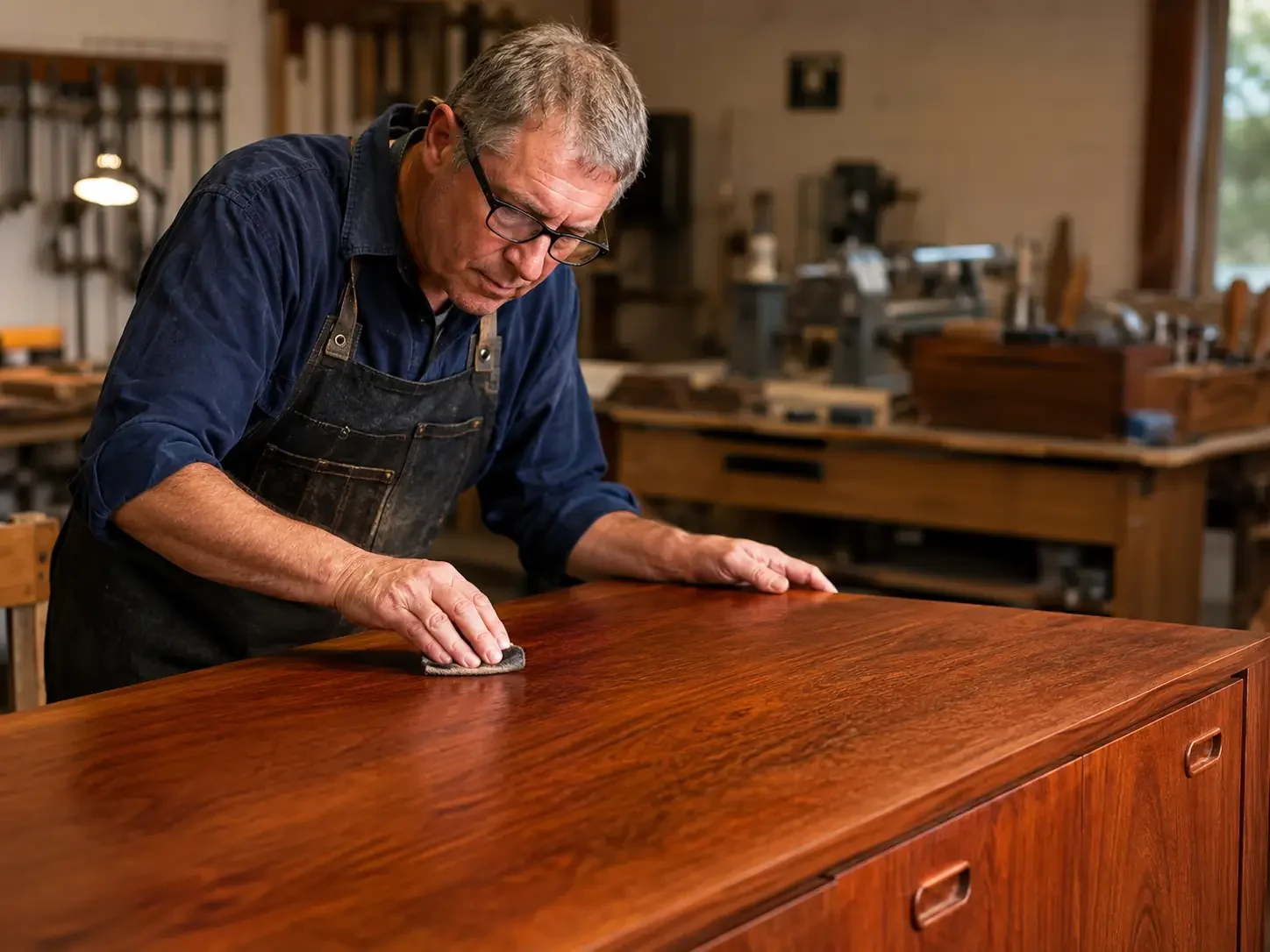
The restorer must also judge colour under different lighting. A tone that appears balanced in a workshop may look significantly warmer or darker in a home.
The final finish should complement the furniture’s proportions and timber rather than become the first thing a viewer notices.
Preserving Value Does Not Mean Making Furniture Perfect
Owners often ask whether restoration will increase or protect the value of their furniture. There is no universal answer because value depends on the maker, rarity, condition, originality, demand and quality of the work.
However, unsuitable restoration can reduce the qualities collectors and informed buyers look for.
Original labels may be removed during sanding. Crisp edges may become rounded. Replacement hardware may be fitted without regard for the period. A thick coating may conceal attractive grain or make the piece difficult to restore properly later.
The safest objective is not to guarantee an increase in market price. It is to avoid unnecessary changes that reduce authenticity and future options.
Patina Can Be Part of the Furniture’s Identity
Patina develops through light, handling, use and time. It may include gentle colour variation, softened edges or small marks that do not compromise function.
Removing every sign of age can leave a vintage piece looking flat or newly produced.
A specialist distinguishes between stable patina and active deterioration. Loose veneer, failed finish, deep water damage and structural movement require attention. Subtle evidence of age may deserve to remain.
This is the basis of restoration with restraint: changing what must be corrected without erasing what makes the piece original.
Sustainability Comes From Keeping Good Furniture in Use
Furniture restoration can support sustainability by extending the useful life of existing pieces and reducing unnecessary replacement.
However, sustainability is not only about selecting a product labelled environmentally friendly. It also involves making measured decisions throughout the project.
Repairing an original component may be preferable to replacing it. Localised treatment may preserve more material than complete stripping. A durable, maintainable finish may prevent repeated intervention.
Products should still be selected according to performance, compatibility and safe workshop practice. A low-toxicity product is not automatically appropriate for every timber or existing coating.
The most sustainable restoration is one that respects the material, performs reliably and reduces the need for avoidable future work.
How to Evaluate a Mid-Century Furniture Restorer in Melbourne
A polished social media photograph does not reveal the full quality of a restoration.
Before choosing a restorer, ask questions that show how they assess materials, structure and previous work.
Consider the following:
Does the restorer regularly work with original mid-century furniture and veneered surfaces?
Do they assess structural movement before discussing cosmetic refinishing?
Can they explain how the existing coating will be identified and tested?
Do their completed projects show restrained finishes rather than one identical result?
Can they explain what should be preserved, what requires correction and what may remain visible?
Is the furniture handled in an established workshop with a clear consultation process?
A trustworthy restorer should be willing to explain limitations. Not every stain can disappear, not every failed repair can be reversed and not every piece justifies extensive intervention.
Honest advice is a stronger indicator of expertise than promises of perfection.
Review Completed Work Carefully
Before-and-after photographs can reveal whether edges remain defined, grain looks natural and colour remains appropriate to the furniture.
Look beyond dramatic transformations. Examine close-up details, repaired joints, drawer alignment, hardware and the relationship between restored and original surfaces.
The mid-century restoration gallery provides examples of furniture and interior work completed with an emphasis on original materials, practical use and restrained finishing.
Ask Who Will Complete the Work
Some businesses outsource part or all of the restoration process. That is not automatically a problem, but the owner should understand who is assessing the piece and who will complete the structural and finishing work.
Continuity matters because decisions made during disassembly, cleaning or surface preparation can affect the later stages.
A craftsman-led process allows observations made at the beginning of the project to guide the work through to final inspection.
What Richard Lloyd Brings to the Restoration Process
My approach to furniture restoration developed through years of practical craft work, finishing experience and close attention to material behaviour.
In the workshop, I do not begin with the assumption that every piece needs a complete strip and refinish. I first assess how it was constructed, what has already been changed and which original elements can be retained.
That may mean rebuilding a loose joint before touching the visible surface. It may mean reducing a stain rather than sanding through veneer. It may also mean advising an owner that limited cleaning and maintenance are more appropriate than full restoration.
The purpose of experience is not to impose the same result on every project. It is to recognise the differences between pieces and respond accordingly.
When Professional Restoration Is the Safer Choice
Basic maintenance may be manageable at home when the surface is stable and the appropriate care method is known.
Professional assessment becomes more important when furniture shows loose joints, lifting veneer, water damage, deep staining, structural movement or signs of an earlier unsuccessful restoration.
It is also advisable when:
The maker, materials or existing finish are unclear
The furniture has financial, historical or strong sentimental value
The owner is considering machine sanding, chemical stripping or bleaching
Original labels, stamps or unusual hardware need to be protected
A chair, table or cabinet no longer feels safe during normal use
The cost of a professional assessment is often small compared with the difficulty of correcting material that has been removed or altered unnecessarily.
Discuss Your Mid-Century Furniture in Melbourne
A useful first step is to photograph the complete piece, damaged areas, joints, undersides, labels, hardware and existing finish.
These details help identify whether the furniture is likely to need structural repair, refinishing, veneer work or a more limited conservation approach.
Richard Lloyd at Mid Century Restoration personally assesses projects from the Northcote workshop. You can contact a mid-century furniture restorer in Melbourne to share photographs and discuss the safest next step for your piece.
The aim is to provide clear advice before irreversible work begins.
Frequently Asked Questions
Why should I choose a specialist mid-century furniture restorer?
Mid-century furniture often combines thin veneer, precise joinery, distinctive proportions and finishes that respond poorly to aggressive modern methods. A specialist is more likely to recognise these materials, assess structural problems first and choose a restoration approach that preserves original character.
Is a master craftsman qualification required for furniture restoration?
A formal title alone does not prove that someone is suitable for a particular project. Owners should evaluate practical restoration experience, material knowledge, workshop processes, completed projects and the restorer’s ability to explain risks and limitations clearly.
Can professional restoration protect the value of mid-century furniture?
Careful restoration can help preserve originality, function and condition, which may support value. However, no restorer can guarantee that work will increase the market price. The priority should be avoiding unnecessary sanding, inappropriate coatings and alterations that reduce authenticity.
Can all scratches and stains be removed?
No. Some marks only affect the finish and can be reduced safely. Others penetrate the timber or veneer. Removing a deep mark completely may cause greater damage, so a specialist may recommend softening its appearance rather than removing excessive original material.
How can I tell whether my furniture contains veneer?
Edges, undersides and damaged areas may reveal a thin decorative timber layer over another material. However, veneer can be difficult to identify from photographs alone. A professional assessment is advisable before sanding an uncertain surface.