
Can Mid-Century Furniture Be Restored Without Losing Value?
Yes, restoration protects value — as long as everything done to the piece is reversible and as much original material as possible stays on it.
Value is destroyed by removal, not by repair. Sand through the veneer, seal teak under polyurethane, or replace original hardware, and no amount of skill afterwards brings the value back.
Mid-century furniture can often be restored without losing its value, but the outcome depends on what is restored, how the work is completed and which original elements remain intact.
Owners are right to be cautious. Sanding, refinishing, replacing hardware or repairing joints can alter a piece permanently when the work is poorly planned. However, leaving active damage untreated can also affect condition, usability and future value.
The safest approach is not to avoid restoration altogether. It is to choose a level of intervention that responds to the furniture’s actual condition while preserving its original timber, veneer, construction, proportions and character.
At Mid Century Restoration in Melbourne, I assess each piece individually before recommending any work. A stable cabinet with gentle surface wear may need very little intervention. A chair with loose joints or a sideboard with lifting veneer may need timely repair to prevent further material loss.
The purpose of restoration is not to make vintage furniture look newly manufactured. It is to protect what makes the piece significant while returning it to safe and practical use.
What Protects Value, and What Destroys It
When restoring vintage furniture, the choices you make can either preserve its value or permanently reduce it.
Reversible work is usually the safest approach. Glues used on joints should be removable in the future, sanding should be minimal and controlled, and finishes should suit the period of the piece. Traditional oils and waxes are often preferable because they can be maintained or renewed without permanently altering the timber.
Original details matter as well. Hardware should be retained wherever possible and, if necessary, cleaned or re-plated rather than replaced with modern handles or feet. Maker's labels, stamps, and other identifying marks should always be preserved. Even when a component is damaged, repairing the original material is generally better than replacing it with new timber.
The biggest risks come from permanent changes. Epoxy, construction adhesive, aggressive sanding, heavy stains, polyurethane coatings, and modern replacement hardware can all make future restoration more difficult. Sanding through veneer or removing original labels can cause damage that simply cannot be reversed.
The principle is straightforward: if the next restorer can undo the work in forty years, the intervention is usually safe. If the change is permanent, it deserves much more consideration. On a good piece, irreversible work is rarely worth the risk.
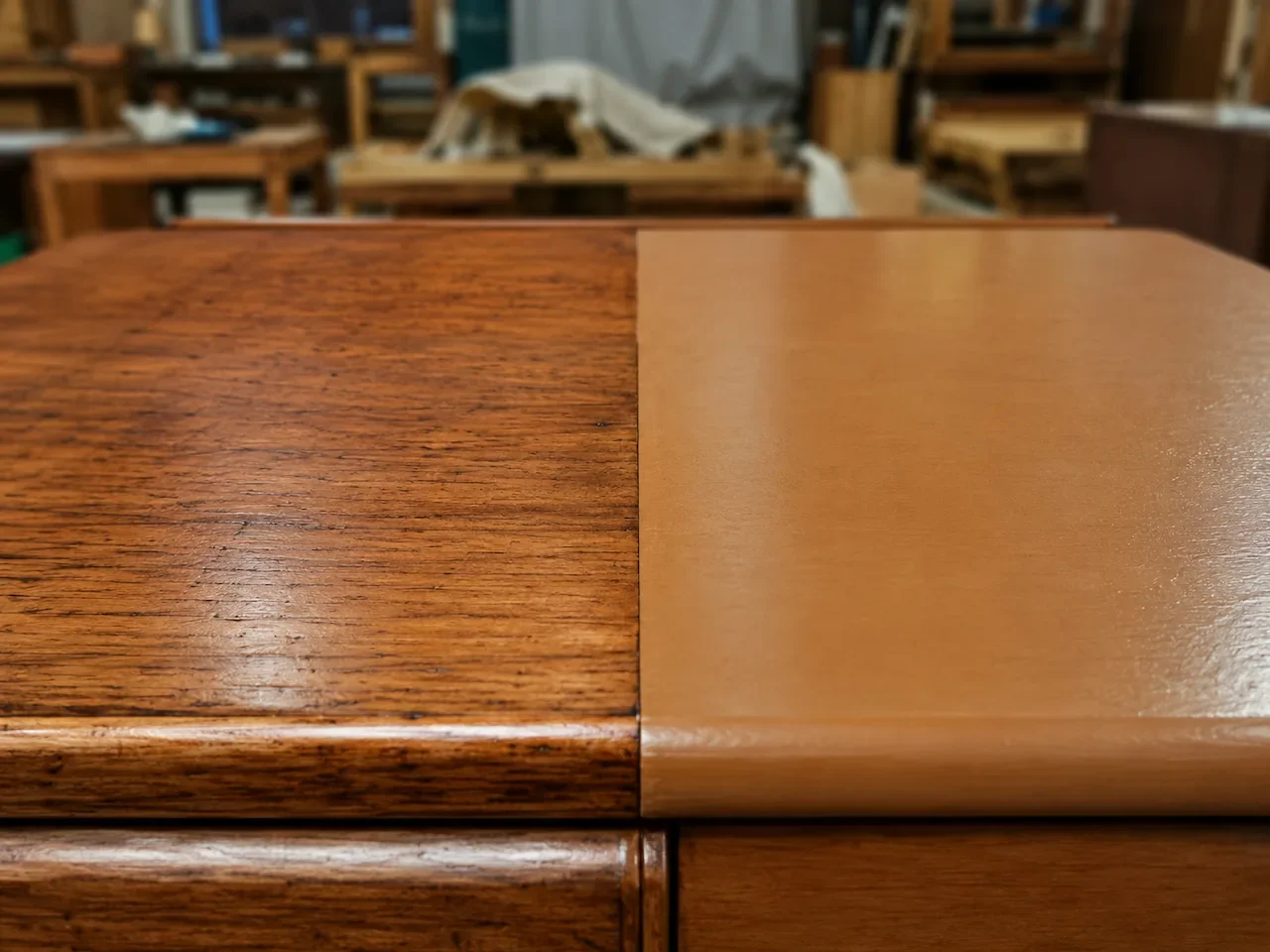
A client brought me four Tessa swivel chairs a while back. They had left the factory with a red-tinted varnish over the timber, which was typical of the period but is not to everyone's taste today. Underneath was blackwood.
The decision was not as simple as stripping them back. Removing a factory finish is irreversible, and on some pieces the original coating is part of what a collector is paying for.
In this case, however, the varnish had failed unevenly and the chairs were returning to daily use rather than going into a collection. The damaged finish was removed, and the blackwood was treated with a natural wax instead.
That allowed the timber to show properly while keeping the new finish easy to maintain. The wax can be reapplied by anyone in the future without having to sand or alter the timber again.
That last point is what matters most. Whatever I do to a piece should leave the next person with options, not problems.
What Value Means in Mid-Century Furniture
Value is often discussed as though it refers only to resale price. In practice, a piece of furniture can hold several types of value at the same time.
An original designer piece may have a recognised market value. A well-made but unlabelled cabinet may be valuable because of its materials and construction. A family dining table may have limited collector demand but considerable sentimental and practical importance.
Before restoration begins, it helps to understand which kind of value the owner wants to protect.
Important factors can include:
The designer, maker, manufacturer, model and documented provenance
Original timber, veneer, finish, hardware, labels and construction details
Structural condition, surface condition and evidence of previous alteration
Rarity, market demand and the quality of comparable examples
Functional usefulness, replacement difficulty and sentimental importance
No single factor determines the answer. A famous label does not compensate for severe alteration, while an unmarked piece can still deserve careful restoration because of its design and craftsmanship.
Originality Is Important, but Condition Also Matters
Originality can influence collector interest, especially when the finish, hardware, labels and construction remain substantially intact.
However, originality should not be confused with neglect.
A loose joint is original damage, not valuable patina. Lifting veneer can break away if it is ignored. A failing coating may expose timber to moisture, staining and continued wear.
The decision is therefore not simply whether to preserve everything exactly as it is. It is whether intervention can prevent deterioration without removing features that remain sound and meaningful.
Provenance Can Affect the Restoration Strategy
A documented piece by a recognised maker may require a more conservative approach than an ordinary vintage item intended mainly for daily use.
Labels, stamps, model numbers, purchase records and family history can all help establish provenance. These details should be documented and protected before cleaning, sanding or disassembly begins.
When the maker or significance is unclear, an assessment should consider the whole piece rather than relying on one label or online comparison.
Restoration Is Different From Over-Restoration
Restoration focuses on stabilising, repairing and preserving existing material. Over-restoration changes more of the piece than its condition requires.
The distinction is critical when owners want to restore mid-century furniture without losing value.
A restrained restoration might repair a moving joint, secure lifting veneer, reduce a distracting stain and refresh a failing finish. Over-restoration may strip every surface, remove all patina, darken the timber heavily and replace original hardware simply to create a more uniform appearance.
The Goal Should Not Be Perfection
Vintage furniture has lived through decades of use. Small marks, softened surfaces and natural colour variation can contribute to its identity.
Removing every indication of age may require excessive sanding or replacement. The result can look clean but disconnected from the original furniture.
Good restoration aims for structural stability and visual balance rather than artificial perfection.
Some Signs of Age Should Remain
Patina generally refers to stable changes created by handling, light exposure and time. It may include gentle wear, subtle variation in colour and minor marks that do not threaten the material.
Damage is different. Loose joints, active cracks, unstable veneer, significant moisture problems and failed finishes can continue to deteriorate.
A preservation-focused restorer must distinguish between the two. The aim is to retain appropriate patina while correcting conditions that affect strength, protection or usability.
For a deeper explanation of this philosophy, read about mid-century restoration with restraint.
When Restoration Can Protect Value
Careful restoration can protect value when it prevents further damage, preserves original material and returns the furniture to safe use.
A chair that cannot support weight has reduced practical appeal. A sideboard with veneer beginning to lift may lose original material if the problem is ignored. A table with a failing finish may become increasingly vulnerable to staining and moisture.
Timely intervention can prevent these conditions from becoming more difficult or expensive to address.
Structural Stability Supports Usability
Furniture was made to function. Even a rare or attractive piece becomes difficult to live with when its frame moves, joints open or components no longer align.
Structural work should normally happen before cosmetic refinishing. Disassembly, clamping and alignment may disturb a newly completed surface if the sequence is reversed.
Professional furniture repair and structural restoration in Melbourne can address weakened joints and frames while retaining original components wherever practical.
Stabilising Veneer Can Prevent Material Loss
Veneer was commonly used as an intentional design and construction material. It allowed makers to create controlled grain patterns and stable surfaces using attractive timber.
When veneer begins to lift, crack or chip, delaying treatment can allow the damage to spread. A small loose edge may eventually break away, making the repair more visible and complex.
Professional stabilisation may preserve the existing veneer by cleaning the failed bond, introducing a suitable adhesive and applying controlled pressure without damaging the face.
A Failing Finish May Need Attention
An intact original finish can be worth preserving. A coating that has broken down, become unstable or stopped protecting the timber may require treatment.
The correct response may be cleaning, localised correction or controlled refinishing. Complete removal should not be assumed until the existing surface has been assessed.
The level of work should be proportionate to the condition of the finish and the significance of the piece.
When Restoration Can Reduce Value
Restoration is more likely to reduce value when it removes original material, changes important details or creates an appearance that no longer suits the furniture.
This can happen through poor DIY work or through a professional process that prioritises dramatic transformation over preservation.
Excessive Sanding
Many mid-century cabinets, tables and drawer fronts use veneer rather than thick solid timber.
Aggressive sanding can cut through this decorative surface, expose the substrate and soften crisp edges. Once original veneer has been removed, it cannot simply be recreated through staining or polishing.
Even on solid timber, heavy sanding can alter proportions, round corners and remove maker’s marks or construction evidence.
Inappropriate Coatings and Colour Changes
A thick, highly reflective coating can obscure grain and change the tactile quality of the piece. An excessively dark stain can hide variation but also make refined furniture feel visually heavy.
The correct finish depends on the timber, existing coating, intended use and original appearance. Oil is not automatically appropriate for every piece, just as every modern coating is not automatically unsuitable.
Through specialist teak and timber furniture refinishing, the surface can be tested before a compatible preparation and finishing method is selected.
Unnecessary Hardware Replacement
Handles, hinges, drawer runners, screws and fittings can help establish the period and identity of a piece.
Original hardware should not be replaced merely because it looks aged. Cleaning, adjustment or repair may be enough.
When replacement is unavoidable, the new component should suit the original dimensions, function and design. Additional drilling or oversized fittings can cause permanent alteration.
Poorly Planned Structural Repairs
Visible screws, large brackets and inappropriate adhesives may create temporary stability while damaging timber or preventing correct repair later.
A strong intervention can still reduce integrity when it ignores the original construction.
Structural repair should restore function with as little unnecessary alteration as possible.
How a Professional Assessment Protects the Piece
A professional assessment should happen before the owner commits to sanding, refinishing or replacing components.
The furniture must be examined as a complete object. Surface appearance alone does not reveal whether joints are moving, veneer is unstable or an earlier repair is failing beneath the finish.
What the Restorer Should Examine
The assessment may include the timber species, veneer thickness, joints, frame, hardware, finish history, labels and signs of previous intervention.
The restorer should also ask how the furniture will be used. A collectible cabinet displayed carefully may require a different treatment from a family dining table used every day.
The recommended work should explain what can remain untouched, what requires intervention and what limitations may remain after restoration.
Testing Reduces Unnecessary Risk
Cleaning agents, coating-removal methods and proposed finishes should be tested in a concealed or low-visibility area where practical.
Testing can reveal whether a dark surface is caused by dirt, old polish, stain or the original coating. It can also show how the timber will respond before the full piece is altered.
This step is especially important when the maintenance and refinishing history are unknown.
Documentation Supports Transparency
Photographs taken before, during and after restoration can document original details, damage, disassembly and repairs.
Documentation is useful for the owner and may support future care or resale discussions. It also encourages a transparent process by showing what was changed and why.
Should the Original Finish Always Be Preserved?
An original finish can contribute to authenticity, but preserving it is not always technically possible or practical.
A stable finish with light wear may respond well to cleaning and local treatment. A finish that is peeling, severely stained, contaminated or no longer protecting the timber may require broader intervention.
The decision should consider condition rather than originality alone.
Conservation May Be Enough
When the structure is sound and the finish remains largely intact, limited conservation may be preferable to full refinishing.
This might involve gentle cleaning, stabilising a small area of veneer, repairing a minor joint and protecting the existing surface.
A minimal approach preserves more original material and avoids introducing unnecessary visual change.
Refinishing May Be Justified
Refinishing may become appropriate when the coating has failed extensively, previous work has produced an unsuitable surface or damage cannot be addressed through local treatment.
Even then, removal should be controlled. The objective is not to strip every surface automatically but to create a sound foundation for a compatible finish.
Does Professional Restoration Increase Resale Value?
Professional restoration can improve resale appeal, but it cannot guarantee a higher selling price.
A stable, clean and usable piece may attract greater buyer confidence than furniture with loose joints, lifting veneer or an obviously failed finish. High-quality restoration can also make the design and timber easier to appreciate.
However, financial value depends on factors outside the restoration itself.
The maker, rarity, provenance, market demand, original condition and quality of comparable examples all influence price. Some collectors prefer untouched examples, while others accept sensitive professional restoration when it is documented and appropriate.
Restoration Quality Matters More Than the Label
Calling a piece “professionally restored” does not automatically make the work valuable.
Buyers may examine veneer edges, hardware, colour, sheen, joinery and signs of sanding. Poor work can remain visible even when the furniture photographs well from a distance.
A value-conscious restoration should withstand close inspection and honest explanation.
Avoid Guaranteed Value Claims
A restorer can assess condition, technical options and likely risks, but should not promise that a project will increase market value.
The more defensible goal is to protect material integrity, improve usability and avoid changes that would reduce future options.
Examples of completed work can be reviewed in the mid-century restoration gallery, with attention given to surface character, structural details and the level of intervention used.
When Furniture Should Be Left Mostly Original
Not every piece with visible age needs restoration.
Furniture may be best left largely original when the structure is stable, the finish remains protective and the wear is consistent with normal use.
Gentle cleaning and appropriate care may be enough.
Intervention should be considered more seriously when:
Joints move, frames lean or components no longer support normal use safely
Veneer is lifting, cracking or beginning to break away
Moisture damage is active or the source has not been resolved
The finish is peeling, unstable or no longer protecting the timber
Previous repairs are failing or causing additional damage
The owner is considering aggressive sanding or irreversible colour changes
The decision should follow the condition of the individual piece rather than a fixed rule about age.
Is DIY Restoration Worth the Risk?
Light maintenance can often be completed safely at home when the material and finish are known.
Full restoration carries greater risk because it may involve veneer, structural joints, old coatings and irreversible surface preparation.
Machine sanding is particularly dangerous on uncertain surfaces. It can remove veneer rapidly, flatten details and create low areas that become more obvious after finishing.
Household oils and polishes can also cause contamination or incompatibility. A product marketed for general wood care may not suit the coating already on a vintage piece.
DIY work becomes especially risky when the item has financial, historical or strong sentimental importance. The cost of professional advice may be small compared with correcting material that has been removed permanently.
How to Choose the Right Restoration Approach
The best restoration plan is not necessarily the most extensive one.
A value-focused approach asks what the furniture needs to remain stable, useful and recognisable. It should avoid cosmetic work that adds cost without protecting the piece.
The process may involve:
Identification and documentation: Record labels, hardware, dimensions, damage and construction details before work begins.
Condition assessment: Determine whether the main concerns affect the structure, veneer, timber, coating or several areas together.
Testing and treatment planning: Test cleaning and finishing methods before altering visible surfaces.
Structural and veneer repairs: Stabilise joints, frames and lifting material before final surface work.
Controlled finishing: Preserve sound original finish where practical or apply a compatible replacement when broader refinishing is justified.
Final inspection and care advice: Confirm stability, alignment and finish performance, then provide maintenance guidance suited to the completed surface.
Every piece will not require every stage. The plan should be adjusted as new information becomes visible during cleaning or disassembly.
Caring for Value After Restoration
Restoration does not end when the furniture leaves the workshop.
Heat, standing moisture, abrasive cleaning and strong sunlight can affect even a well-restored surface. Ongoing care should match the finish applied to the piece.
Use coasters, placemats and pads on frequently used surfaces. Wipe spills promptly and avoid harsh multipurpose cleaners or unknown furniture oils.
Do not add another coating simply because the timber appears slightly dry. The appearance may relate to the existing finish rather than a lack of oil.
Keep any restoration records, photographs and information about the maker with the furniture. These details may support future maintenance and help a later owner understand what work was completed.
Careful Restoration Protects More Than Appearance
Mid-century furniture can often be restored without losing value when the work is based on assessment, restraint and respect for original material.
The safest process does not promise to erase every mark or increase the resale price automatically. It identifies active damage, protects sound components and chooses the least invasive method capable of returning stability and visual balance.
Some pieces need structural repair. Others need veneer stabilisation or controlled refinishing. Some should remain mostly untouched.
The correct decision depends on the furniture itself, not a standard restoration formula.
Before You Commit to Anything
If a piece has any chance of being valuable, get it looked at before work starts. Identifying the maker changes what's appropriate to do to it, and that assessment takes minutes.
See how I approach restoration or send photographs for an honest assessment.
Frequently Asked Questions
Can mid-century furniture be restored without reducing its value?
Yes, in many cases, when the work preserves original materials, proportions, hardware and construction. Value may be reduced by excessive sanding, unsuitable coatings or unnecessary replacement. A professional assessment should identify the least invasive treatment appropriate for the piece.
Does refinishing always reduce the value of vintage furniture?
No. Refinishing may be appropriate when the existing coating has failed or an earlier treatment is unsuitable. The result depends on how much original material is removed, whether the new finish suits the furniture and how significant the original surface is.
Is original patina more valuable than a restored finish?
Sometimes, but not universally. Stable patina can contribute to authenticity and collector interest. Active deterioration, such as lifting veneer or a failing coating, should not be mistaken for valuable patina. The condition and significance of the individual piece determine the safest approach.
Should loose joints be repaired even if the furniture is collectible?
Usually, yes, when movement threatens safety or causes continued damage. Structural repair should be completed carefully, retaining original components and construction wherever practical. Temporary screws, brackets or surface-applied glue may affect integrity and future value.
Can damaged veneer be restored without replacing it?
Often, depending on the extent of the damage. Lifting or locally cracked veneer may be stabilised and re-adhered. Missing or severely damaged sections may require a matched repair. Early treatment generally preserves more original material.
Will professional restoration increase the resale price?
It may improve buyer confidence and presentation, but no increase can be guaranteed. Resale value also depends on the maker, rarity, provenance, market demand, original condition and quality of the completed work.
Is DIY restoration safe for valuable mid-century furniture?
Routine cleaning may be safe when the finish is known, but extensive DIY restoration carries significant risk. Machine sanding, harsh chemicals, unsuitable adhesives and incompatible coatings can permanently alter veneer, timber and original details.