
To tell if furniture is genuine mid century modern, check its construction, timber, veneer, maker marks, hardware and signs of age. Authentic pieces usually have materials and manufacturing details consistent with their production period. Tapered legs or a teak coloured finish alone aren't enough to prove a piece is original.
Perhaps you've found a teak sideboard at a vintage furniture shop, inherited an old dining table or spotted a chair advertised as an original mid century design. It looks right, but how can you be sure?
At Mid Century Modern Restoration Man, we work with original vintage furniture at our Fitzroy workshop in Melbourne. When examining a piece, we look beyond its overall appearance. Drawer construction, original finishes and even the underside of a cabinet can provide clues that aren't visible at first glance.
Understanding these details can help you make a more informed buying decision and avoid removing original materials during restoration.
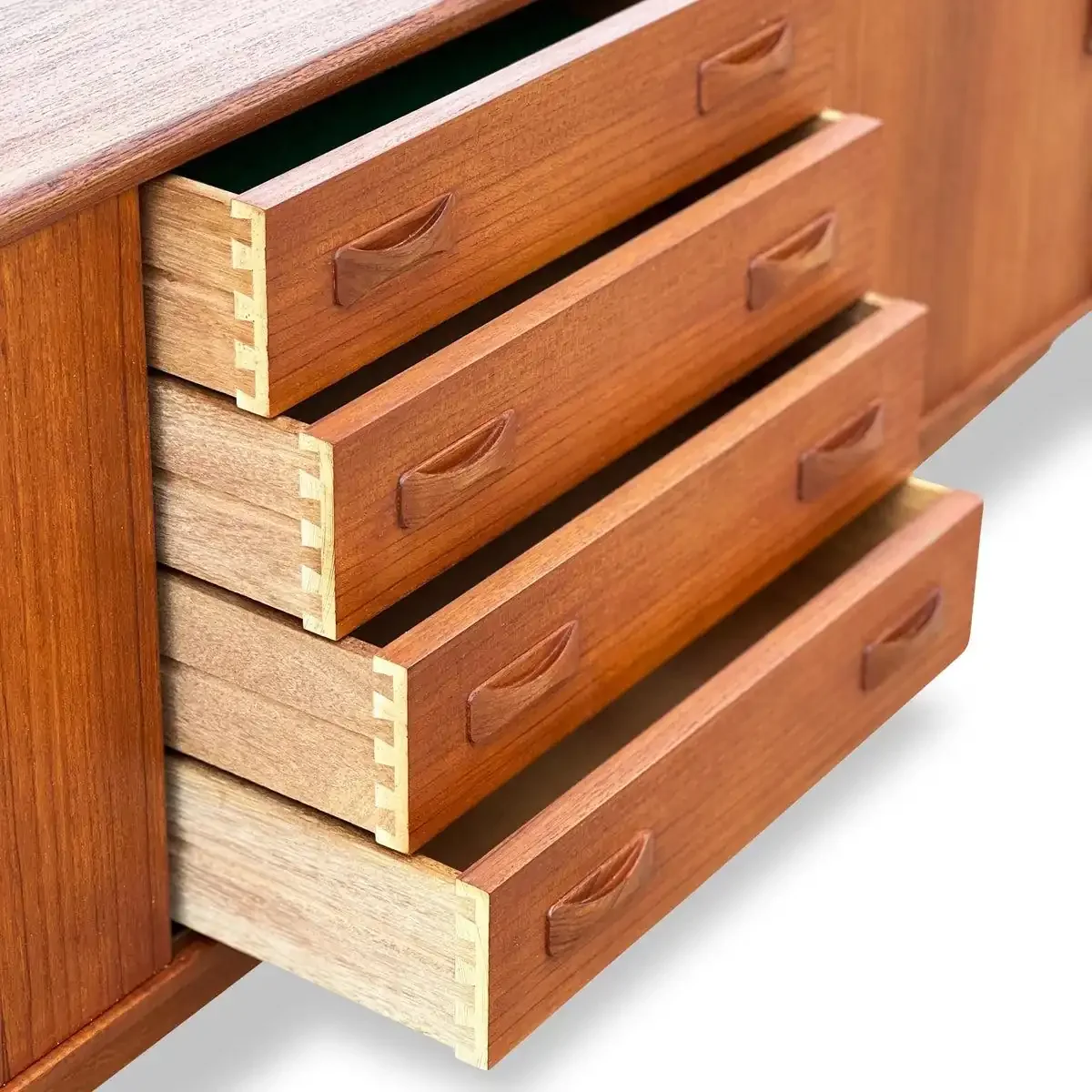
What Makes Furniture Genuinely Mid Century Modern?
Mid century modern furniture is associated with the middle decades of the twentieth century, particularly designs produced from the 1940s through the 1970s.
The style favoured practical forms, clean lines, balanced proportions and materials suited to modern living.
You'll often see tapered legs, low cabinets, sculpted timber frames and handles incorporated into drawers or doors.
But here's the important distinction. A modern cabinet can copy all those features without being an original period piece.
When we examine furniture, we're interested in whether its materials, construction, hardware and finish make sense together.
A piece's appearance provides a starting point. Its construction helps tell the fuller story.
Check the Timber and Veneer
One of the first things to examine is the timber.
Teak, walnut, rosewood, oak and beech appear in many original mid century designs. Manufacturers used both solid timber and decorative veneers, sometimes combining them in the same piece.
Veneer isn't automatically a sign of cheap furniture.
Many quality vintage cabinets and sideboards use carefully selected veneer to create attractive grain patterns across wide surfaces.
Look closely at the doors and drawer fronts. Do the grain patterns continue naturally? Are adjacent panels arranged symmetrically? Can you see where veneer meets the supporting material along an edge?
These details can reveal how the piece was made.
We also examine less visible areas, including cabinet interiors, drawer backs and undersides. They can help us understand the original materials without disturbing a finished surface.
If you're unsure whether a piece is worth preserving, our guide to identifying valuable mid century furniture explores how materials, construction and condition influence its significance.
Look at the Joints and Construction
Construction often tells you more than styling.
When inspecting an older cabinet or table, pay attention to how its components are connected.
Original mid century furniture may use dowels, fitted timber joints, mortise and tenon construction or carefully assembled factory made components.
Machine production doesn't automatically mean a piece is modern. Many respected vintage manufacturers combined industrial production with skilled assembly.
Remove a drawer carefully, where practical, and examine its sides, base and runners.
Look underneath the cabinet or table to see how the legs and supporting rails are fitted.
Modern screws, staples or lightweight fittings may raise questions, but they aren't conclusive evidence. Original furniture can have replacement hardware or repairs completed much later.
The important question is whether the construction is consistent with the furniture's likely age and manufacturer.
Where Can You Find Mid Century Furniture Maker Marks?
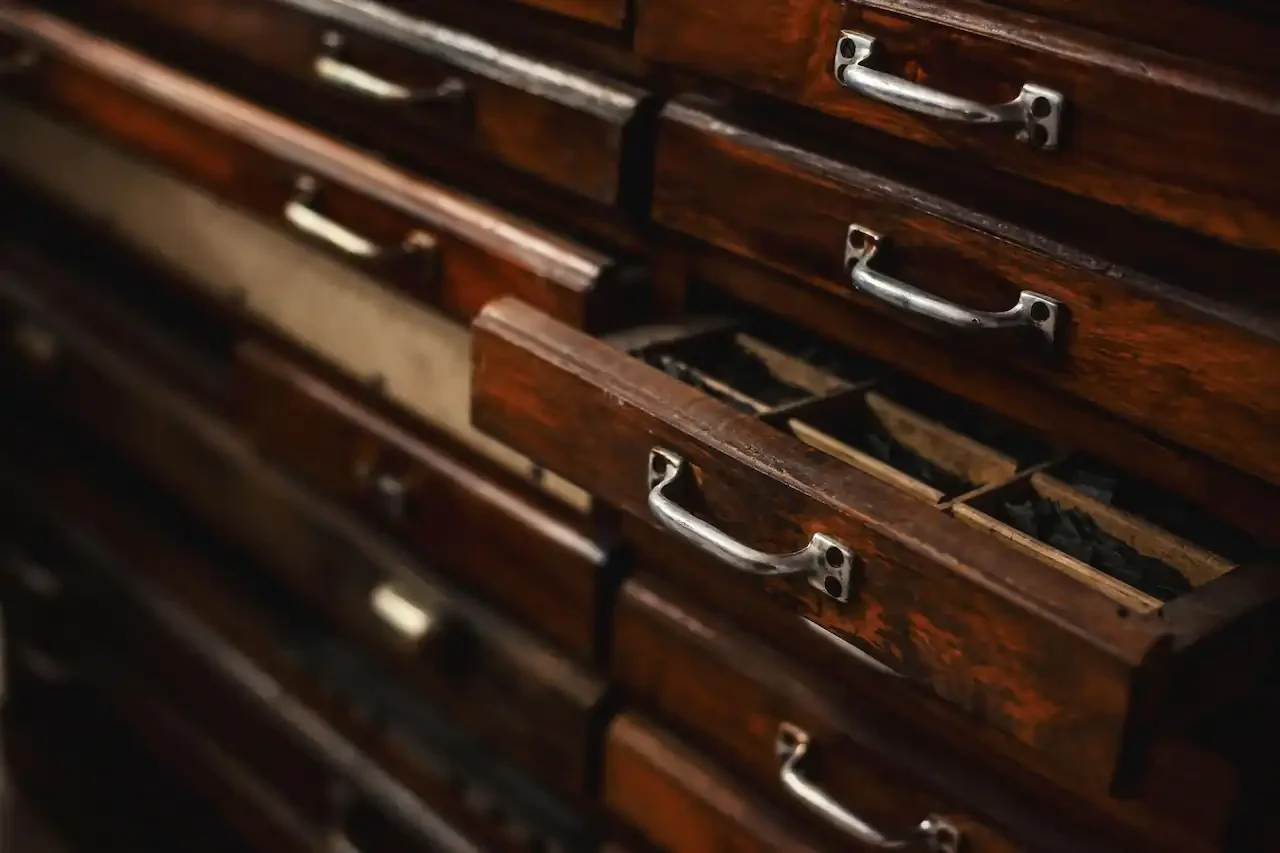
Maker marks are useful clues when identifying original furniture.
Depending on the manufacturer, a piece may have a paper label, stamped name, branded mark, metal badge or serial number.
Common places to inspect include the underside of chairs and tables, the backs of cabinets, drawer interiors, the underside of drawers and areas near original hardware.
Be gentle when checking these locations. Old paper labels can be fragile, and a surviving mark may be an important part of the furniture's history.
If you find a name or number, photograph it clearly before attempting to clean the surrounding surface.
Compare the marking with documented examples from the manufacturer, including period catalogues and known furniture designs.
Remember that a label alone doesn't guarantee authenticity. Marks can be transferred, reproduced or incorrectly associated with a piece.
Our guide to mid century furniture makers' marks and labels provides more detail about identifying these markings.
Can Furniture Be Authentic Without a Label?
Yes. An original piece may have no surviving maker mark.
Labels can disappear through use, cleaning, earlier restoration or simple deterioration.
Some furniture was also sold without prominent manufacturer identification.
When a label is missing, we examine the materials, proportions, joinery, hardware and existing finish together.
For instance, an unmarked teak sideboard might still show construction and design details consistent with vintage production.
That doesn't automatically establish a particular maker. It means the remaining evidence deserves careful consideration.
Avoid assuming that an unlabelled piece is a reproduction. Equally, don't assign it to a famous designer simply because it looks similar.
How to Spot Mid Century Furniture Reproductions
Modern reproductions can look remarkably similar to original furniture.
Some use the same general shapes, timber colours and leg designs that made vintage pieces recognisable.
The differences may become more apparent when you examine hidden construction details.
Look at how the drawers fit, how the legs attach and what materials appear beneath the decorative surfaces.
Printed timber patterns, inexpensive modern fittings or construction methods inconsistent with the claimed period can provide clues.
However, no single feature confirms that a piece is a reproduction.
Original furniture may contain manufactured board materials, while high quality reproductions can use traditional timber construction.
A later licensed reissue is also different from an unlicensed reproduction or furniture that merely borrows the style.
Before purchasing a piece advertised as an original, ask the seller what evidence supports its age and attribution.
Look for Natural Wear and Original Finishes
Age can leave useful clues, particularly in areas exposed to regular handling.
A drawer handle may show wear from repeated use. The timber beneath a tabletop may retain a different colour from its exposed surface.
Original finishes may also show gentle fading, surface marks or changes in sheen.
These details can help us understand a piece's history.
But wear isn't proof of authenticity.
Modern furniture can be artificially distressed, and original furniture may have been refinished or carefully maintained.
We pay particular attention to areas protected from sunlight and frequent use. A cabinet interior or the underside of a table may retain evidence of the original finish.
That's one reason to avoid sanding or stripping an unknown piece before identifying it.
Once an original coating is removed, valuable clues about its construction and history may disappear with it.
What Should You Check Before Buying a Vintage Dining Table or Sideboard?
When you're considering a vintage dining table, start with the surface and work your way underneath.
Check whether the top is solid timber or veneer. Examine the edges for lifting material, look at the condition of the joints and inspect any extension mechanism where one is fitted.
A table can look attractive from above while having structural or finish problems that aren't immediately obvious.
For sideboards, open the drawers and doors. Examine their construction, check the hinges and look for evidence of previous repairs.
A loose handle or replacement fitting doesn't necessarily make a piece inauthentic, but you should understand what has been changed.
Ask about the furniture's history and any restoration already completed.
If a seller attributes the piece to a particular designer or manufacturer, request supporting evidence rather than relying on its appearance.
This approach helps you distinguish genuine period furniture from later pieces that share the same styling.
Does Restoration Affect the Authenticity of Mid Century Furniture?
Restoration doesn't automatically make an original piece inauthentic.
However, the methods used can affect how much original material remains.
Aggressive sanding may remove thin veneer. Heavy staining can conceal the timber's natural appearance, while an unsuitable coating may obscure evidence of the original finish.
We assess vintage furniture before deciding whether it needs cleaning, local repair or more extensive restoration.
Sometimes preserving an existing finish is preferable to replacing it.
Other pieces have loose joints, damaged veneer or coatings that genuinely need attention.
Our teak and timber furniture refinishing service explains how we approach original timber surfaces and necessary repairs.
The aim is to improve the furniture while retaining as much of its character and construction as practical.
Is Genuine Mid Century Furniture Always Valuable?
Not necessarily.
An original piece can have modest market value, while another from a recognised maker may attract greater collector interest.
Its condition, originality, design, manufacturer and current demand all influence how buyers assess it.
Furniture with original hardware and a well preserved finish may appeal to collectors who value authenticity.
However, a piece with replaced parts or an altered finish isn't automatically without value.
Sentimental importance matters too. A family dining table may be worth restoring because of its history, regardless of its resale price.
If you're considering restoration, we recommend understanding the piece before deciding how much work is appropriate.
When Should You Ask a Furniture Restoration Specialist?
Some pieces are straightforward to identify. Others require a closer examination.
If you've found a sideboard with no maker's label, a dining table with unusual construction or a cabinet that has been heavily refinished, its age and originality may be difficult to establish from appearance alone.
At our Fitzroy workshop, we examine original timber furniture, its construction and condition before recommending restoration work.
You can explore our mid century furniture restoration services to learn more about our approach.
While not every piece can be attributed to a specific designer or manufacturer, a careful assessment can help identify which original features remain and what restoration may be appropriate.
Have You Found a Vintage Piece You're Unsure About?
Whether you've inherited a teak cabinet or found a dining table advertised as mid century modern, it's worth examining the details before making changes.
Look underneath it. Check for labels. Notice the grain, joints and signs of previous repairs.
Most importantly, avoid removing original finishes simply because the surface looks worn.
At Mid Century Modern Restoration Man, we want your furniture to retain the details that make it worth keeping.
If you're considering restoration and aren't sure what you have, contact Richard about your furniture. Tell us about the piece and provide photographs through the available email contact method so we can discuss the next appropriate step.
Frequently Asked Questions
How can you tell if furniture is genuine mid century modern?
Examine the construction, timber, veneer, hardware, original finish and maker marks. Genuine period furniture should have materials and design details consistent with its likely production date. No single feature proves authenticity.
Where are maker marks usually found on mid century furniture?
Check beneath chairs and tables, inside drawers, behind cabinets and around original hardware. Marks may appear as stamps, paper labels, badges or serial numbers.
Can mid century furniture be authentic without a maker's mark?
Yes. Labels may have deteriorated or been removed, and some original pieces were never prominently marked. Construction, materials and documented design features may still help establish their age and origin.
How do you distinguish original mid century furniture from a reproduction?
Compare the materials, joinery, hardware, finish and proportions with documented period examples. Modern reproductions may share the same appearance, so hidden construction details and provenance are particularly useful.