
How to Remove Water Rings, Heat Marks & White Marks from Wood Furniture (Without Ruining the Finish)
roblem entirely. White marks usually mean trapped moisture in the finish. Dark marks mean moisture has reached the timber underneath — through cracks, worn finish, or under lifted veneer.
Dark stains can require controlled stripping, stain reduction, colour correction, refinishing, or veneer repair. These steps shouldn't be rushed, and sanding is rarely the answer: on veneer especially, sanding can cut straight through the thin top layer and expose the base material below. If dark staining comes with lifting veneer, swelling or cracking, the issue is no longer just cosmetic it may need structural repair before any finish work begins.
Can Oil Remove White Marks from Wood Furniture?
Oil can improve the look of dry timber, but it isn't a universal fix for white marks — and used incorrectly, it can trap the problem under a new layer or leave the surface looking uneven.
Ask yourself before reaching for the oil:
Is the mark moisture trapped in the finish, or something else?
Is the surface already sealed?
Is there polish buildup underneath?
Is the timber genuinely dry, or is the finish just cloudy?
Could oil darken the area unevenly compared to the rest of the piece?
For teak and other mid-century timber, oiling can work well when it's the right call for that finish — but it's not a cure-all. If the piece needs more than surface care, our teak and timber furniture refinishing servicematches the finish choice to the timber's original character rather than applying a one-size-fits-all treatment.
How Professionals Remove Water Rings and Heat Marks
A professional process starts with assessment, not product. Before touching the surface, we identify:
The finish type — wax, oil, lacquer, shellac or varnish
The timber and whether veneer is involved
How deep the damage actually goes
Whether there's prior restoration work to account for
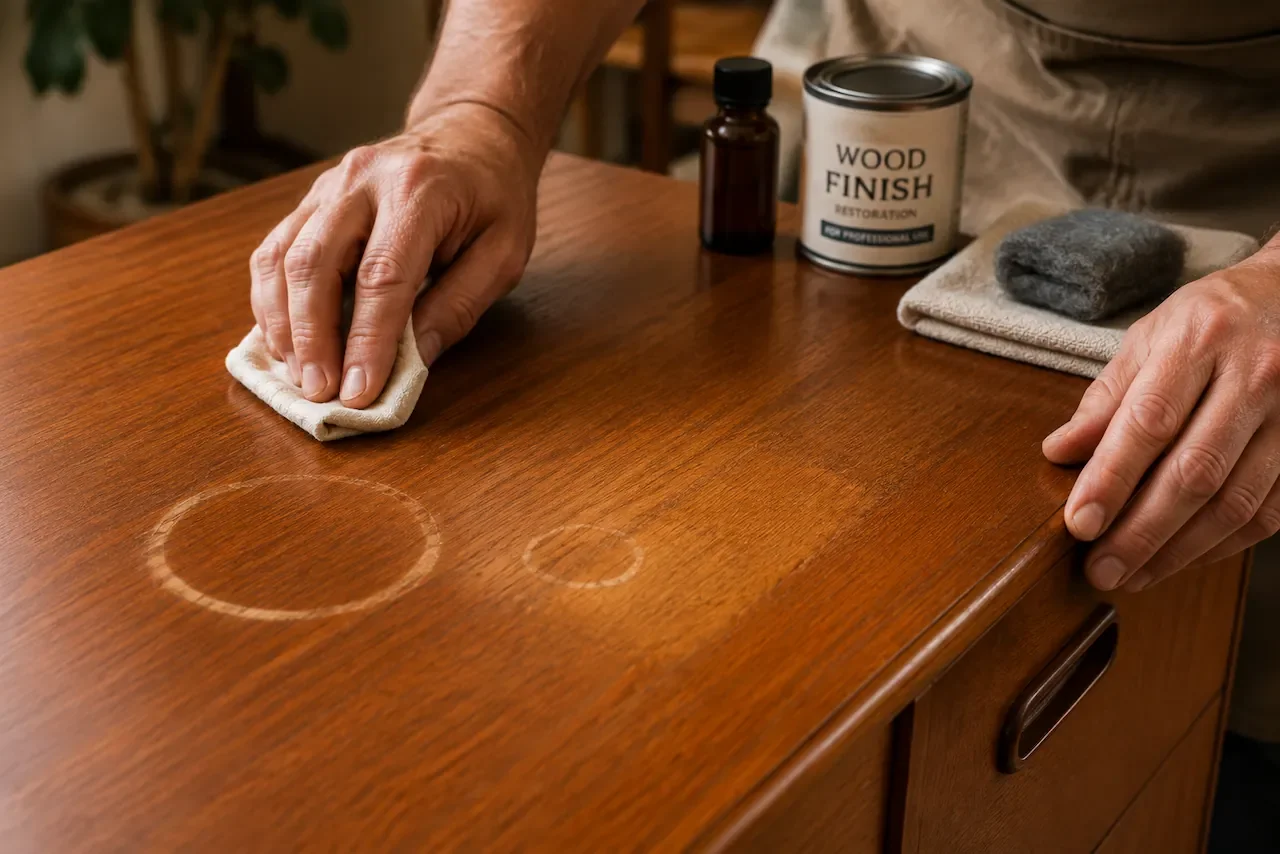
From there, the process typically includes cleaning the surface safely, testing any treatment in a discreet area, reducing trapped moisture where possible, reconditioning the finish if it's still stable, and refinishing only where genuinely necessary with sheen and colour matched to the surrounding surface.
The aim is always to reduce or remove the mark while keeping as much original material as possible. Sometimes full removal is realistic. On older pieces, the better outcome is often a careful reduction that keeps the finish stable rather than an aggressive strip-back.
How to Prevent Water Rings and Heat Marks
Prevention is far easier and cheaper than repair.
Use coasters under glasses and cups, always
Use placemats or heat-resistant pads under plates, serving dishes and warm objects
Keep plant pots off wooden surfaces, or use a sealed tray underneath
Wipe spills immediately, blotting gently rather than rubbing
Keep damp cloths, wet towels, and hot electronics off timber surfaces
If the finish is already worn, treat it as more vulnerable — a protective restoration now can prevent future marks
When to Ask a Restoration Specialist
Ask a specialist for help if the mark is dark, the piece is valuable, the surface is veneer, the finish is original, or gentle care hasn't improved it. It's also worth calling in help if a previous DIY attempt has left dullness, scratches, sticky residue or a larger white patch than you started with.
Our furniture restoration servicesare built around exactly this kind of assessment-led repair — for timber pieces that need careful surface correction, refinishing or preservation-led restoration rather than a quick fix. If you're unsure whether a mark is safe to treat at home, get in touch with our Fitzroy workshop before applying heat, oil or anything abrasive. A five-minute assessment can prevent a small surface issue from becoming a permanent one.
Conclusion
Water rings, heat marks and white marks on wood furniture can usually be improved — but the safest method always depends on the finish, timber, age and depth of the damage, not on whichever home remedy is trending this week. Light white marks often respond to gentle cleaning and time. Dark stains, rough textures, veneer damage or a failed finish need a more careful, assessment-led approach.
My advice hasn't changed in 30 years of doing this: start with the least aggressive option, test before you commit, and stop the moment something looks worse rather than better. At Mid Century Modern Restoration Man in Fitzroy, we focus on protecting the timber, preserving the original character of the piece, and restoring it with patience rather than shortcuts. Done properly, the right approach reduces the mark while keeping the furniture strong, beautiful and true to its original design — whether that's a family dining table or a treasured teak sideboard. If you'd like a second opinion on a mark before you try anything, our woodwork courses and hands-on workshops are also a great way to learn safe restoration techniques directly from the workshop.
Why Choose Us
We assess the finish before treating any water ring or heat mark
We use controlled methods instead of harsh, one-size-fits-all removal
We protect veneer, timber grain and original mid-century character
We restore damaged finishes with careful colour and sheen matching
We help Melbourne clients avoid costly DIY damage
We give honest advice before any restoration work begins
Frequently Asked Questions
How do I remove water rings from wood furniture?
Start by gently cleaning the surface and letting it dry fully. Light white rings often improve when the moisture is trapped only in the finish rather than the timber itself. Avoid aggressive household remedies until you know what type of finish is on the piece. Darker rings, rough areas, or marks that go below the finish usually need controlled restoration or professional refinishing.
Can heat marks be removed from wood furniture?
Some heat marks can be reduced or removed when the damage is limited to the top finish layer. Mild, cloudy marks may respond to careful moisture release or finish treatment, but the right method depends on the coating and the furniture's condition. Severe heat damage, softened finish, rough texture, cracking or deep discolouration usually needs professional treatment.
Are white marks on wood permanent?
Not always. White marks are commonly caused by trapped moisture, heat or pressure affecting the clear finish rather than the wood underneath. In many cases they can be reduced or removed safely while the finish is still stable. Older marks, repeated moisture exposure, or damage beneath the finish can be harder to fully correct.
Does the mayonnaise or Vaseline trick actually work?
Sometimes — but only under the right conditions. These home remedies work by using oil to displace moisture trapped in a sealed, modern finish, and they're a reasonable first try on light, fresh white rings on everyday furniture. They're far riskier on wax, shellac, oil-finished, veneered, antique or mid-century pieces, where the oil can darken the timber unevenly or trap the problem under a new layer. Always test on a hidden spot first.
Should I use an iron and a damp cloth to lift a water ring?
We don't recommend it, especially on vintage or valuable furniture. Direct heat from an iron can soften old lacquer or shellac, enlarge the cloudy area well beyond the original mark, or loosen veneer adhesive. It's one of the most common home methods we see cause bigger problems than the one it was meant to fix.
Can I sand out water rings?
Generally, no — not without properly assessing the finish, veneer thickness and underlying timber first. Water rings often only affect the surface coating, so sanding can remove far more material than necessary. Heavy or uneven sanding can cut through veneer, remove an original finish, soften edges, or create patches that are harder to blend than the original mark.
When should I call a professional for water marks?
Call a professional when the mark is dark, deep, rough or spreading, or when the furniture is valuable or sentimental. It's also worth getting advice if the surface is veneer, the original finish should be preserved, or previous DIWritten by Richard Lloyd, furniture restorer at Mid Century Modern Restoration Man, Fitzroy — 30+ years restoring timber and mid-century furniture in Melbourne.
A white ring appears on the sideboard overnight. A cloudy patch shows up under a hot mug the morning after a dinner party. If you've searched for how to remove water rings from wood furniture, you're probably staring at one right now and wondering whether to reach for mayonnaise, an iron, or the phone.
Here's the short answer: most white water rings sit inside the finish, not the timber itself, so many can be improved with gentle care. But the "safe" fix depends entirely on what the furniture is made of, how old the finish is, and how dark the mark has become. Get that wrong especially on teak, walnut, veneer or an original mid-century finish and a small ring can turn into a much bigger, more expensive problem.
At our Fitzroy workshop, we inspect timber and mid-century pieces almost every week where a well-meaning DIY fix has made the mark worse rather than better. This guide walks through what actually causes these marks, which home methods genuinely work (and which don't), and when it's time to stop experimenting and call a professional.
Why White Marks Appear on Wood Furniture
White or cloudy marks form when moisture or heat gets trapped inside the finish layer, the lacquer, shellac, wax or polish sitting on top of the timber, not the wood itself. It usually happens when a cold glass, hot mug, plate, vase or damp cloth sits on the surface for too long.
The mark looks white or hazy because trapped moisture changes the way light passes through the finish. In most cases, the timber underneath isn't damaged yet the problem is above it, in the coating. Left untreated, or if the surface is exposed to repeated moisture, that trapped dampness can travel deeper and turn into staining, lifted veneer or finish breakdown.
If your piece also has scratches or deeper surface damage alongside the ring, our guide to fixing scratches, water damage and stains on wooden furniture covers how to treat combined damage properly, rather than tackling each mark in isolation.
Don't reach for the sandpaper yet. Most white marks need a proper look before any permanent step is taken.
Water Rings vs Heat Marks vs White Marks: What's the Difference?
These terms get used interchangeably, but the cause tells you a lot about the fix.
Water rings usually come from moisture trapped under or inside the finish cold glasses, plant pots, vases or wet objects left on the surface.
Heat marks come from warm plates, mugs, serving dishes or heated objects. Heat can soften the finish enough to let moisture or air get trapped underneath.
White marks are the visible result — cloudy, circular, patchy or hazy patches that can be caused by moisture, heat, polish reaction or finish failure.
Colour is the key clue. White or cloudy marks are usually close to the surface and easier to treat. Dark brown or black marks suggest moisture has reached the timber itself, and those are much harder to remove safely without professional help.
Before You Try Anything: Check the Finish
Every home remedy you'll find online mayonnaise, petroleum jelly, an iron and towel, baking soda paste assumes a modern, sealed finish. That assumption is exactly where most DIY attempts go wrong on older or vintage furniture.
A modern polyurethane-sealed surface can often tolerate light treatment. An old shellac, wax, oil or lacquer finish common on furniture from the 1950s–1970s reacts far more sensitively. Antique and mid-century pieces are especially risky because the original finish is often thin, aged or already weakened by decades of use.
Before doing anything, check:
Is the surface glossy, satin, matte or waxy?
Is the mark white, grey, brown or black?
Does the surface feel sticky, rough or raised?
Is there veneer on the surface?
Has the piece had previous restoration work?
Does the mark sit on the finish, or does it look like it's inside the wood?
If the furniture is valuable, veneered, antique, or has original mid-century character, it's safer to avoid aggressive DIY methods altogether.
Our article on whether mid-century furniture can be restored without losing its value explains why preserving the original surface usually matters more than chasing a perfect, mark-free finish.
What People on Reddit and Quora Actually Try — And What We'd Add
Search any home-improvement forum and you'll find the same handful of remedies recommended again and again: mayonnaise, petroleum jelly (Vaseline), an iron over a damp cloth, and baking soda mixed with toothpaste. There's a reason these keep coming up: the oils in mayonnaise and petroleum jelly can genuinely displace trapped moisture in a sealed, modern finish, and enough people have had partial success that the tips persist.
But the same threads are full of a second, quieter pattern: people who tried the iron trick or a scrub-heavy remedy on an antique or veneered piece and ended up with a bigger cloudy patch, a scorch mark, or a duller finish than they started with. A few common threads worth knowing before you copy a home hack:
The mayo/Vaseline trick works best on light, fresh, white rings on a sealed modern finish — not on wax, shellac, oil finishes or anything with sentimental or resale value. Several commenters note it can darken the surrounding timber unevenly if left too long.
The iron-and-towel method is the one restorers see backfire most often. Direct heat can soften old lacquer, cloud a wider area than the original mark, or loosen veneer glue — which is exactly why we don't recommend it on vintage or mid-century pieces.
Toothpaste and baking soda are mildly abrasive, which is why some people report success on tough stains — but the same abrasion can dull a satin or waxed finish and leave fine scratches that are more visible than the original ring.
The most consistent advice from experienced woodworkers and restorers on these forums: test any product on a hidden edge first, use the gentlest method first, and stop immediately if the surface changes texture.
That last point matches exactly what we tell clients at the workshop: start mild, go slow, and treat community "hacks" as a starting point for cheap, modern furniture not as instructions for a teak sideboard, an antique table, or anything with an original finish.
Safe Methods for Light White Water Rings
Light white rings are the most manageable, since they usually sit only in the finish.
Clean gently first. Wipe with a soft, dry cloth. If there's dust or polish buildup, use a barely damp cloth with mild soapy water, then dry the area immediately.
Let it breathe. Leave the piece in a dry, well-ventilated room. Some light moisture marks fade naturally once the finish fully dries out this can take days, especially on recent marks.
Use warmth with real caution, if at all. Gentle, indirect warmth can sometimes help release trapped moisture, but too much heat can soften the finish, enlarge the cloudy area, or damage veneer adhesive. We don't recommend irons or hairdryers on high heat anywhere near valuable furniture.
In many cases, a professional can reduce white rings through controlled cleaning and finish reconditioning without ever sanding into the timber.
What to Avoid When Removing Water Rings
Most of the damage we see didn't come from the original water ring, it came from what was tried afterwards. A small white mark can quickly become a full restoration job if the surface is scrubbed, overheated, sanded heavily, or treated with the wrong chemicals.
Avoid:
Harsh chemical cleaners, bleach, ammonia and abrasive pads
Heavy sanding, which can expose bare timber underneath a thin finish
Strong heat or steam, which can soften lacquer, cloud the surface or weaken veneer adhesive
Excessive oil, abrasive toothpaste, or hard baking soda scrubbing
Dark stain applied directly over the mark (it usually looks patchy, not fixed)
Silicone furniture sprays, which can contaminate the finish and complicate future restoration
The risk is highest on teak, walnut, rosewood or veneered furniture, or anything that still has its original finish. A technique that works fine on a cheap modern flat-pack table can permanently damage an antique cabinet or a mid-century teak sideboard. Always start with the mildest possible treatment, and stop the moment the surface turns sticky, dull, rough or discoloured.
When Heat Marks Need Professional Care
Heat marks can be trickier than plain water rings because heat doesn't just leave a mark it can soften, cloud, compress or distort the finish itself.
Call in professional help when:
The mark remains after gentle cleaning
The surface feels rough or raised
The cloudy area has spread beyond the original mark
There's a visible colour change in the timber, or damage to veneer
The piece has sentimental or financial value
Previous DIY attempts have enlarged the mark, softened the finish, or left scratches or uneven shine
At the workshop, we assess whether a heat mark is contained within the finish or has penetrated into the timber. If it's surface-level, careful reconditioning is often enough. If the coating has failed or separated, controlled refinishing may be needed. If your furniture has lost its shine or gone dry after heat or moisture exposure more generally, our timber refinishing techniques guide explains how the right finish is chosen to match the timber and its condition.
What If the Mark Has Turned Dark?
A dark mark is a different pY treatments haven't worked. A restorer can identify the finish, assess how deep the damage goes, and choose a repair method that avoids unnecessary sanding or refinishing.
Have a piece with a stubborn water ring, heat mark, or something more serious?Book a free consultation with our Fitzroy workshop, or send us a photo via our contact page for honest, no-obligation advice